Browsed by
Category: News

Sri Lanka’s Stock Market Emerges as Leading Performer in Asia

Sri Lanka’s Stock Market Emerges as Leading Performer in Asia

In a time when Asian equity markets buzz with action, Sri Lanka stands out. It has shown strong performance among emerging markets. The Colombo Stock Exchange (CSE) is celebrated worldwide for its impressive 29.65% return in USD on the ASPI this year.

This increase is a sign of the country’s strong economic recovery. It is making a big mark in South Asian business and trade.

Sri Lanka's Stock Market Emerges as Leading Performer in Asia

According to Bloomberg.com, as of October 25, 2024, the CSE is a top player in global finance. It ranks second among its peers. The growth in market size and the entry of foreign investment are key reasons behind this success.

Investors are showing more trust. This is thanks to a mix of top-notch stocks and diverse investment options available in the country.

The recent success isn’t just about numbers. It’s also about growing confidence in the nation’s stable economy and creative economic moves. The CSE’s strong performance also reflects clear and solid governance in Sri Lanka. This is moving the country into the league of high-performing economies.

Unveiling the Success Story of the Colombo Stock Exchange

The Colombo Stock Exchange (CSE) is a major player in Asia’s financial scene. It has shown strong growth and resilience. The CSE reflects Sri Lanka’s economic recovery and helps it grow by increasing market size and attracting foreign investments.

An Impressive Year-to-Date Return

As of October 2024, the ASPI has climbed 29.65%. This is one of the best results in the region. The increase comes from strong investor belief and interest in major companies. It shows a healthy and expanding market.

Record-Breaking Trading Days and Turnover

The CSE’s trading activity has reached new highs. Daily turnover hit historic levels. For example, in the last week of October 2024, it was Rs. 3.058 billion. And in the final two days, it exceeded Rs. 4.7 billion.

These numbers show Sri Lanka’s market is lively and robust. It’s attractive for both local and international traders.

Sri Lanka’s Resilient Capital Market

The Sri Lankan market is dealing well with global economic challenges. It shows strength and the chance for more growth. Foreign investors engage actively, and the market size is steadily growing.

This helps Sri Lanka’s wider economic recovery. The stability and chances here are great for investors and companies.

The Colombo Stock Exchange plays a key role in Sri Lanka’s financial health and growth. It helps with short-term recovery and long-term wealth. It stands as a pillar of financial stability in Sri Lanka.

Analyzing Market Drivers Behind the Stellar Performance

Sri Lanka’s stock market is doing great because of several important reasons. The country’s economic recovery is a big one. This recovery gets a huge boost from a lot of foreign investment inflows. These investments help grow the market size and make investors feel more confident.

Blue-chip stocks are gaining more attention too. They help keep the market stable and push it forward. People are also liking diversified portfolios more. They want to lower their risks and make the most of the growing economy. The strengthening of the Sri Lankan Rupee against the US dollar shows that people believe in the market. You can see more about this in a detailed analysis by OMP Sri Lanka.

  • Economic recovery: Speeded up by government reforms and rejoining the global market.
  • Foreign investment inflows: Big rise in investments from abroad, especially in tech and infrastructure.
  • Market capitalization growth: Reached new highs, thanks to strong performance in key areas.
  • Investor confidence: Grew with clear policies and better regulation.
  • Blue-chip stocks: Still popular with investors in emerging markets.
  • Diversified portfolios: Investors are diversifying their assets more.

These factors together are not just helping Sri Lanka grow sustainably. They also put Sri Lanka on the map as a strong player in the world economy. Looking at these factors, both investors and policymakers are hopeful about Sri Lanka’s economic future.

Sri Lanka’s Stock Market Emerges as Leading Performer in Asia

The Colombo Stock Exchange has risen against global economic challenges. It now stands as Asia’s second-best performing equity index as of October 25, 2024. This highlights not just current success but also the long-term growth of Sri Lanka’s market.

Investor confidence has grown thanks to more foreign investments and a bigger market size. A strong mix of blue-chip stocks has helped the region’s economy recover. Sri Lanka’s market has shown great strength, even when global economies face hard times.

Offering visa-free entry has helped bring more tourists and revive the economy. Efforts to boost exports led to a 15% increase in early 2023. These actions have created a strong foundation for growth. The work of OMP Sri Lanka is crucial for sharing the success stories of Sri Lanka’s markets.

Sri Lanka’s Stock Market Emerges as Leading Performer in Asia

What recent achievement has the Colombo Stock Exchange (CSE) accomplished?

The CSE is now Asia’s second-best equity index performer as of October 25, 2024. Its All Share Price Index (ASPI) reported a rise of 29.65% in USD.

How significant is the daily average turnover for the CSE?

Trading activity has surged, with daily turnover jumping to Rs. 3.058 billion. By the week ending October 25, 2024, it hit over Rs. 4.7 billion in the last two days.

Has the market capitalization of the CSE grown recently?

Yes. The market cap has increased significantly. The ASPI ended at 12,517.58 points while the S&P SL20 index rose to 3,759.30 points. This shows substantial growth and resilience in the market.

What factors have contributed to Sri Lanka’s stock market performance?

Economic recovery and stronger investor confidence have boosted the market. There’s also been an upsurge in foreign investments. Blue-chip stocks and diversified portfolios have strengthened the market too.

What does the CSE’s recent performance imply for the future?

The CSE’s impressive performance points to a bright future. It indicates ongoing economic recovery and new growth opportunities. This attracts both local and foreign investors.

An Impressive Year-to-Date Return

The ASPI of CSE has shown a great return of 29.65% in USD this year. This demonstrates strong potential for investors in diversified portfolios.

Record-Breaking Trading Days and Turnover

There’s been a massive trading increase, breaking previous records. This indicates a lively market and a keen interest in blue-chip stocks.

Sri Lanka’s Resilient Capital Market

The CSE’s success showcases Sri Lanka’s market resilience. It suggests a steady economic recovery and stable growth opportunities, attracting investors.

How have economic recovery and foreign investment influenced the CSE?

Sri Lanka’s economic bounce-back and steady foreign investment inflows have driven CSE’s success. This uplifts market capitalization and investor confidence.

Why are blue-chip stocks and diversified portfolios important for the CSE’s performance?

Blue-chip stocks bring stability and draw substantial investments. Diversified portfolios reduce risks and support market capitalization. These elements are crucial for CSE’s success.
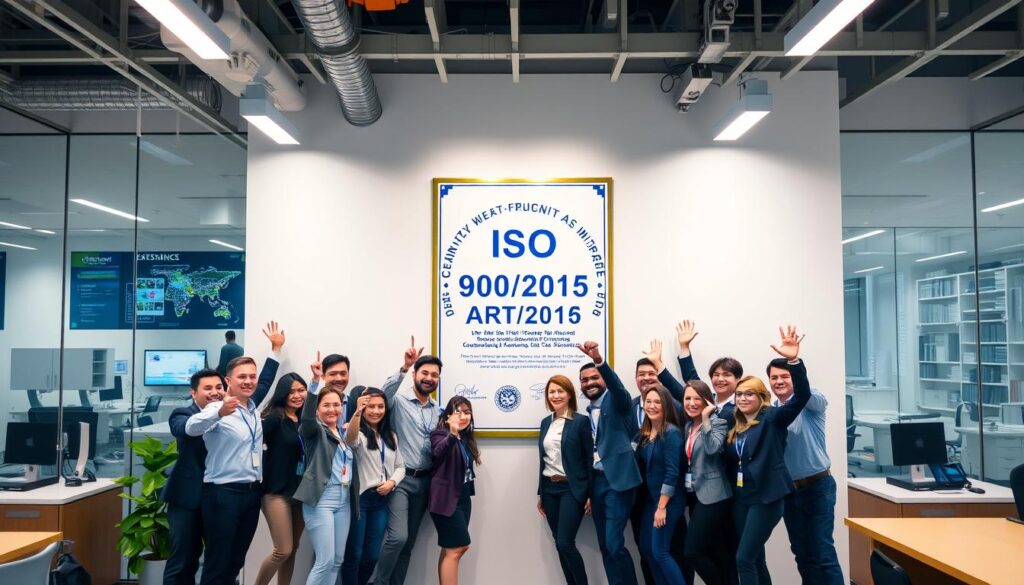
HNB Procurement Earns ISO 9001:2015 Certification

HNB Procurement Earns ISO 9001:2015 Certification

Hatton National Bank PLC (HNB) has reached a major milestone in procurement excellence. The bank’s Procurement Functions have earned the ISO 9001:2015 certification from Bureau Veritas. This recognition highlights HNB’s dedication to top-notch quality management.

HNB Procurement Function Earns Prestigious ISO 9001:2015 Certification

The certification covers HNB’s IT, Stationery, and General Procurement processes. It shows the bank’s focus on improving operations and supplier relationships. This achievement makes HNB a leader in the financial sector.

HNB continues to prioritize efficiency and service excellence. The bank operates through 254 customer centers across Sri Lanka.

HNB Procurement Function Earns Prestigious ISO 9001:2015 Certification

Hatton National Bank’s (HNB) Procurement Function has achieved ISO 9001:2015 certification. This milestone showcases HNB’s dedication to top-quality and efficient procurement processes. The certification proves HNB’s commitment to excellence in banking operations.

Benchmark of Excellence in Procurement Processes

ISO 9001:2015 is a global standard for quality management systems. HNB’s certification shows its use of international best practices in procurement. This achievement sets a new bar for excellence in the banking industry.

The bank’s dedication to ongoing improvement in procurement is clear. HNB continues to lead the way in banking innovation and efficiency.

Certification Awarded by Bureau Veritas

Bureau Veritas, a global certification body, awarded HNB the ISO 9001:2015 certification. They performed a thorough review of HNB’s procurement processes. The bank met the strict ISO 9001:2015 standard requirements.

This success shows HNB’s focus on quality, risk management, and compliance. The bank ensures top-notch performance in all procurement functions.

Covers IT Procurement, Stationery Procurement, and General Procurement

The certification applies to HNB’s IT, Stationery, and General Procurement processes. This wide coverage ensures high standards across all procurement operations. HNB aligns its practices with global benchmarks for better efficiency.

By improving these processes, HNB boosts its ability to serve customers. The bank continues to provide superior value to all stakeholders.

Commitment to Service Quality and Operational Excellence

HNB’s procurement function has earned the ISO 9001:2015 certification. This achievement highlights their dedication to efficient processes. It also shows their commitment to service quality across procurement operations.

ISO 9001:2015 Certification Reinforces Dedication to Efficient and Standardized Processes

HNB aligns its procurement with ISO 9001:2015 international benchmarks. This ensures high standards of operational efficiency. The certification involved thorough reviews and documentation of processes.

HNB fosters a culture of continuous improvement. They strive for excellence in all aspects of procurement.

Aligns Operations with Rigorous International Benchmarks

The ISO 9001:2015 certification ensures HNB follows global best practices. This guarantees consistency and reliability in procurement processes. HNB shows its commitment to superior service quality through this certification.

Enhances Customer Satisfaction through Robust Quality Management Systems

HNB implements strong quality management systems with ISO 9001:2015. These systems help meet and exceed customer expectations consistently. This approach enhances satisfaction and builds long-term relationships with stakeholders.

HNB prioritizes service reliability and consistency. This positions them as a trusted partner in the financial industry.

Benefits of ISO 9001:2015 Certification for HNB and Stakeholders

HNB’s Procurement Function has earned ISO 9001:2015 certification. This achievement brings many benefits to the bank and its stakeholders. It shows HNB’s dedication to efficient, transparent, and customer-focused procurement processes.

Strengthens Internal Processes and Compliance

The certification bolsters HNB’s internal processes. It ensures all procurement activities follow clear procedures and guidelines. This enhancement improves compliance with regulations and reduces non-conformity risks.

HNB can maintain consistent and reliable procurement operations. This is achieved through robust quality management systems.

Enhances Risk Management and Service Reliability

ISO 9001:2015 certification boosts risk management in HNB’s procurement. The bank can ensure reliable supply chain management by identifying and reducing potential risks.

This proactive approach builds stakeholder confidence. They can trust HNB to deliver products and services without interruptions.

Affirms Position as a Customer-Centric Financial Institution

The certification confirms HNB as a progressive, customer-focused financial institution. It shows HNB’s commitment to high-quality, efficient procurement processes.

This achievement proves HNB’s dedication to ongoing improvement. It also demonstrates the bank’s ability to exceed industry standards in service quality and customer satisfaction.

Sri Lanka’s GDP Contracts by 7.8% in 2022; Recovery Ahead

Sri Lanka’s GDP Contracts by 7.8% in 2022; Recovery Ahead

The Sri Lankan economy shrank by 7.8% in 2022 amid an unprecedented crisis. Industry suffered the most, contracting by 16.0%. Agriculture also declined, shrinking by 4.6% that year.

Inflation skyrocketed from 5.9% in 2021 to 46.4% in 2022. This led to a 9.0% drop in private consumption. The central bank hiked policy rates by 1,050 basis points to fight inflation.

Gross capital formation fell by 24.9% in 2022. This further added to the economic downturn. However, signs of slow recovery are emerging.

The fiscal deficit decreased to 10.2% of GDP in 2022. Government spending fell from 15.6% of GDP in 2021 to 14.6% in 2022. Revenue remained steady at 8.3% of GDP.

Protecting the poor is vital during this crisis. They’ve been hit hardest by economic troubles. Recovery may take time, but targeted reforms can help.

International support, like the FAO and Norad fisheries project, is crucial. With these efforts, Sri Lanka can build a more stable future.

Key Takeaways

  • Sri Lanka’s GDP contracted by 7.8% in 2022, with industry and agriculture sectors significantly affected.
  • Inflation soared to 46.4% in 2022, leading to decreased private consumption and increased policy rates.
  • The fiscal deficit narrowed to 10.2% of GDP in 2022, and government recurrent expenditure decreased.
  • Protecting the poor and vulnerable is crucial as Sri Lanka navigates the economic crisis.
  • Gradual recovery is expected with targeted reforms and international support.

Economic Crisis and Contraction in 2022

Sri Lanka faced a severe economic crisis in 2022. The country’s GDP contracted by 7.8%. This crisis stemmed from pre-existing vulnerabilities, policy missteps, and external shocks.

Foreign currency reserves dwindled, causing scarcity of essential goods. An acute energy crisis worsened the country’s fiscal challenges. These factors left Sri Lanka ill-prepared to handle the economic storm.

Factors Contributing to the Economic Crisis

The Sri Lankan rupee depreciated by 44.8% year-on-year in 2022. Inflation rates soared to 46.4%. The country heavily relied on indirect taxes for revenue.

State-owned enterprises (SOEs) were loss-making and depended on government financing. Guaranteed SOE debt totaled 5.6% of GDP by the end of 2022.

Impact on Various Sectors and Living Standards

The crisis affected many sectors. Industry contracted by 16.0%, agriculture by 4.6%, and services by 2.0%. Construction, manufacturing, real estate, and financial services were hit hard.

The human cost was devastating. Half a million jobs were lost. Food insecurity and malnutrition increased. Poverty rates doubled and inequality widened.

Some sectors showed resilience. Smallholders in the Climate Smart Irrigated Agriculture Project saw income improve by 13%. This contrasted with a 19% drop for non-participating households.

The government is now focusing on debt restructuring and reforms. They aim to stabilize the economy and foster recovery. Support from the IMF and international partners is crucial.

The road ahead is challenging. However, resilient sectors and targeted interventions offer hope. A gradual turnaround may be possible with continued efforts.

Fiscal Challenges and Reform Measures

Sri Lanka faces major fiscal challenges amid its economic crisis. The Treasury ran a primary budget deficit of 5.7% of GDP in 2021. The government has taken steps to address these issues through reform measures.

Tax cuts from 2019 have been reversed. Partnerships focusing on precision agriculture are being developed to boost productivity. These efforts aim to promote sustainable practices in the agriculture sector, which shrank by 4.6% in 2022.

Reversal of Tax Cuts and IMF Extended Fund Facility Arrangement

The IMF’s Extended Fund Facility arrangement approval is a crucial step for Sri Lanka’s economy. This bailout package aims to help regain macroeconomic stability. The government is implementing structural reforms to enhance revenue and stabilize the economy.

These reforms include cost-reflective utility pricing and changes in trade and investment. State-owned enterprises and social protection systems are also being reformed. These measures are designed to address the country’s fiscal challenges effectively.

Debt Restructuring Efforts and Stabilization

Sri Lanka is working on debt restructuring with external creditors. In July 2023, Parliament approved a domestic debt restructuring strategy. This shows the country’s commitment to economic recovery.

These adjustments may initially impact growth, poverty, and inequality. However, they’re necessary to correct imbalances and regain access to international financial markets. The Climate-Smart Agriculture Investment aims to strengthen farming against climate change impacts.

There are signs of hope for Sri Lanka’s economic recovery. The Agriculture Sector Modernization Project generated about $141 million in new export earnings. The Climate Resilience Multi-Phase Program helped 11.5 million people across 22 districts.

Shehan Karunatilaka’s 2022 Booker Prize win for “The Seven Moons of Maali Almeida” brought international recognition to Sri Lanka. This literary success offers a glimmer of hope amid the country’s economic challenges.

Sri Lanka’s Foreign Reserves Rebound to $5.5 Billion by April 2024

Sri Lanka’s Foreign Reserves Rebound to $5.5 Billion by April 2024

Sri Lanka’s foreign reserves have bounced back to $5.5 billion by April 2024. This signals a positive trend for the nation’s economic stabilization efforts. The recovery in currency reserves is expected to boost the country’s financial stability.

Foreign Reserves Rebound to $5.5 Billion by April 2024

The World Bank and Asian Development Bank predict positive growth for Sri Lanka in 2024. They project a moderately optimistic outlook over the medium term. The current account may show a slight surplus.

This surplus is likely due to controlled import growth. The revival of tourism and remittances inflows also plays a key role. These factors are vital for strengthening foreign reserves and improving import coverage.

The International Monetary Fund (IMF) has supported Sri Lanka’s economic recovery. Their Extended Fund Facility has helped build up foreign reserves. The government’s debt restructuring efforts have also been crucial.

These actions have created a more stable financial environment. They have boosted confidence among investors and international partners.

Economic Recovery and Stabilization

Sri Lanka’s economy is showing signs of recovery. GDP growth is projected to turn positive in 2024. The World Bank forecasts a 2.2% growth rate for 2024.

This recovery is backed by the IMF’s $2.9 billion bailout package. The package aims to stabilize the economy and promote reforms.

Inflation Expected to Remain Benign in Medium Term

Inflation in Sri Lanka has dropped significantly. Year-on-year headline inflation fell to 1.3% in September 2023. It rose to 4.0% by the end of 2023 due to supply factors.

Core inflation also decreased, showing low demand pressures. Inflation may change due to new VAT rules in January 2024. However, it should stay low as demand remains weak.

Current Account Surplus Driven by Tourism and Remittances

Sri Lanka’s current account surplus is growing. This is due to strong tourism and remittance inflows. Tourism arrivals topped 700,000 in the first 14 weeks of 2024.

Remittances increased to $572 million in March 2024. These inflows are vital for the country’s balance of payments and foreign reserves.

Sri Lanka tourism and remittances

The boost in tourism and remittances helps offset the economic damage. The long crisis has hurt household finances and business activity. As the economy stabilizes, confidence is expected to grow.

Indicator 2023 2024 (Projected)
GDP Growth -3.5% 2.2%
Inflation (Year-end) 4.0% 4.5%
Tourism Arrivals (Jan-Mar) 270,000 700,000
Remittances (March) $475 million $572 million

Foreign Reserves Rebound to $5.5 Billion by April 2024

Sri Lanka’s official reserves have shown a remarkable recovery. They rose from $1.9 billion in late 2022 to $5.5 billion by April 2024. This excludes a swap facility from the People’s Bank of China.

The IMF Extended Fund Facility of $2.9 billion has played a key role. Approved in March 2023, it has greatly boosted the country’s reserve position.

Improved Balance of Payments Position

Sri Lanka faces a growing trade deficit due to rising import spending. However, net inflows from the services sector, especially tourism, have helped offset this.

A new e-visa system and the Pekoe Trail are set to boost tourism. These initiatives, backed by the EU and USAID, should improve the balance of payments.

IMF Extended Fund Facility Supporting Reserve Buildup

The IMF Extended Fund Facility has been crucial for Sri Lanka’s reserve buildup. The country’s commitment to economic reforms has secured this vital support.

Sri Lanka continues to work with the IMF and other partners. This collaboration is expected to strengthen its reserve position and enhance economic stability.

Debt Restructuring Efforts Paving Way for Financial Stability

Sri Lanka is negotiating debt restructuring with international bondholders. These talks are key to restoring debt sustainability and regaining market access.

The government is working hard to reach agreements with creditors. These efforts are creating a better environment for economic growth and investment.

Indicator Value
Foreign Reserves (April 2024) $5.5 billion
IMF Extended Fund Facility $2.9 billion
GDP Growth Forecast (2024) 2.6%

Conclusion

Sri Lanka’s economy is looking up. Foreign reserves are expected to reach $5.5 billion by April 2024. This signals a positive shift in the nation’s economic outlook.

The country’s GDP growth forecast for 2024 has been revised to 2.6%. This contributes to the South Asian subregion’s expansion. The subregion is projected to grow by 6.3% in 2024 and 6.5% in 2025.

However, risks remain. These include the need for deep debt restructuring and potential reform fatigue. Upcoming elections and the recent economic crisis also pose challenges.

These risks are high in Sri Lanka and other South Asian economies. They face high public debt, weak external reserves, and geopolitical tensions.

Implementing the IMF’s structural reform program is crucial. It will boost investor confidence and attract fresh capital inflows. This will support a stronger economic recovery in the medium term.

The Central Bank of Sri Lanka has kept the policy rate at 6 percent. Their medium-term inflation target is 5 percent. Private sector credit growth and lower non-performing loans show a stabilizing financial sector.

The current account deficit is narrowing. Foreign exchange reserves now cover over 4 months of projected imports. Sri Lanka’s economic prospects are improving, despite challenges on the road to recovery.

President Dissanayake Dissolves Parliament, Calls for Elections

President Dissanayake Dissolves Parliament, Calls for Elections

President Anura Kumara Dissanayake has made a significant move in Sri Lanka’s politics by dissolving Parliament. This major step is in readiness for a snap election, abiding by the Constitutional procedure. It reflects President Dissanayake’s intent to reshape government policies to match his vision, following his election win.

President Dissanayake Dissolves Parliament, Calls for November Elections

Under Dissanayake’s lead, the National People’s Power (NPP) held just three seats in the previous 225-member assembly. Yet, this bold move sets the foundation for transforming the legislature. The Election announcement for November 14th aligns with the people’s hopes and comes almost a year ahead of the usual schedule.

Sri Lanka is currently facing tough economic hurdles, a continuation of the 2022 economic slump. Amidst this, the NPP has been vocal about fighting corruption and poverty. This push grew stronger after Dissanayake’s support surged from 3% in 2019 to winning the next election, showing his commitment to strengthening Sri Lanka’s governance. This is crucial for managing the adjustments needed for a vital IMF bailout package.

President Dissanayake’s Bold Move: Dissolving Parliament

Sri Lanka’s new president, Anura Kumara Dissanayake, made a bold move. He dissolved the government. This marks a big moment in Sri Lanka’s politics. It shows he’s serious about his campaign promises for a transparent and reformed government.

President Dissanayake signing Government dissolution documents

Dissanayake leads the National People’s Power alliance. His goal is a new election that reflects the current issues. This action isn’t just symbolic. It aligns with the public’s demands, shown by his win in the election.

A Sudden Parliamentary Decision and Its Background

Dissanayake won the presidency unexpectedly, without a clear majority at first. A second count confirmed his win. His victory in the 2024 elections was a huge leap from a small vote share in 2019. People appreciate his firm stand against corruption.

Implications for Sri Lanka’s Political Landscape

The government’s dissolution is a turning point for Sri Lanka. Snap elections are coming. These elections could change the political scene a lot. Before, the National People’s Power had few seats. The new elections can create a parliament that reflects current public desires.

This change brings hope for not just political reform but economic growth too. A World Bank report expects a 4.4% growth for Sri Lanka in 2024. Development in industry and tourism could boost the economy.

The result of this political shift aims to create a government that truly represents the people. This will shape Sri Lanka’s future political and economic paths in the years ahead.

The Anticipated Impact of the November Election

As the November election date draws near, Sri Lanka is at a crucial point. This concerns its economic and political future. The outcome of the elections is expected to have a big impact. This impact concerns both Sri Lanka’s economy and key policy reforms. These reforms are influenced by the IMF bailout terms and the governance style of the new government.

The decision to dissolve Parliament and set an election timetable is a major political update. It could change the administration’s setup. The IMF’s recent agreement to provide $2.9 billion to Sri Lanka highlights the need for urgent reforms and fiscal stability. The upcoming elections are expected to drive these reforms.

Sri Lanka’s Economy and the IMF Bailout Overhaul

Sri Lanka’s economic situation is critical, with huge foreign debts and a great need for IMF help. After the elections, it will be very important for the government to stick to the IMF bailout terms. This includes debt restructuring and systemic reforms for economic stability. Changes in policy after the November election date could alter the bailout terms. This would affect recovery paths and international economic relationships.

Prospects for Anti-Corruption and Anti-Poverty Policies

The upcoming election is key for anti-corruption policies and anti-poverty policies. The public’s desire for clean governance has made these policies very important. Proper management of these issues could greatly gain public trust and support. This could lead to a government that values transparency and fair growth.

Policy Focus Pre-Election Post-Election Forecast
Economic Stabilization High Dependency on IMF Aid Increased Self-sufficiency
Anti-Corruption Measures Initial Frameworks Set Strengthening of Institutional Mechanisms
Poverty Reduction Limited Social Programs Expansion of Social Safety Nets

This election is crucial for both the immediate economic recovery and the long-term welfare of the nation. As Sri Lanka goes through these significant changes, the whole world is watching. The November elections could mark a significant shift for this South Asian country.

Conclusion

In the landscape of Sri Lanka politics, President Dissanayake’s decision to dissolve parliament is key. This move leads to an election on November 14, 2024. Over 17 million voters are set to cast their votes. The world will watch as Sri Lanka tackles this pivotal moment amidst economic hardships. The nation’s efforts to meet IMF’s fiscal conditions are crucial for growth.

The race for 225 seats in Parliament is filled with anticipation. To gain a majority, a party needs at least 113 seats. With only three seats, the governing party faces a tough challenge. This comes after Harini Amarasuriya became the first female prime minister in decades. Her election is significant, mirroring the era of Sirimavo Bandaranaike. Additionally, steps like lowering policy rates show efforts to boost the economy without harsh austerity.

President Dissanayake’s call for November elections starts a journey to tackle corruption and poverty. With the election date near, there’s a push for effective governance. The next parliament meets on November 21, 2024. They face challenges like debt renegotiation and following IMF’s advice. The upcoming elections are watched globally, offering a chance for Sri Lanka’s recovery and political renewal.