Browsed by
Category: News

Sri Lanka: Inflation Drops to Single Digits by Mid-2024

Sri Lanka: Inflation Drops to Single Digits by Mid-2024

Sri Lanka’s economy is bouncing back after the 2022 economic crisis. Inflation has dropped from 69.8% in September 2022 to single digits by mid-2023. This shows a positive change in the country’s finances.

Smart money policies and reforms have helped stabilize the exchange rate. The IMF program has also supported the economic recovery. As a result, the economy grew in the last two quarters of 2023.

Inflation Drops to Single Digits by Mid-2024 After Peaking in 2022

Official reserves increased to US$3.0 billion by the end of 2023. This is a big jump from US$500 million at the end of 2022. The Sri Lankan rupee also gained 10.8% in value during 2023.

The economy is stabilizing faster than expected. This has improved the short-term growth outlook. Experts now predict 4.4% growth in 2024.

These trends show the Sri Lankan economy’s strength. They also prove that government and central bank measures are working well.

Sri Lanka’s Economic Crisis and Inflation Peak in 2022

Sri Lanka faced a severe economic crisis in 2022. The country defaulted on its debt due to unsustainable levels and depleted reserves. Multiple factors caused this crisis, including poor economic management and structural weaknesses.

The economy shrank by 7.8% in 2022 and 7.9% in early 2023. Tourism, a key industry, collapsed during the crisis. This led to widespread job losses and shortages of essential goods.

The country experienced power cuts lasting up to 15 hours daily. This further strained the already struggling economy and affected daily life.

Factors Contributing to the Economic Crisis

Several factors contributed to Sri Lanka’s economic crisis, including:

  • Macroeconomic mismanagement
  • Long-standing structural weaknesses
  • Exogenous shocks
  • Unsustainable debt levels
  • Depleted reserves

Sri Lanka economic crisis

The Ceylon Electricity Board and Petroleum Corporation faced huge losses. They needed government help and loans from state banks to survive. The government had to support state banks with increased tax revenue.

Inflation Reaching Record Highs in 2022

Inflation in Sri Lanka peaked at 69.8% in September 2022. This caused the rupee to lose 81.2% of its value against the US dollar. Household budgets suffered due to tax hikes, price increases, and income losses.

Real wages fell by 16.9% in the private sector between 2021 and 2024. In the public sector, they dropped by 22% during the same period.

Year Inflation Rate Currency Depreciation
2022 69.8% 81.2%
2023 (August) 4% 11% appreciation

Rising fuel and electricity prices hurt households. Higher taxes affected individuals and businesses, increasing production costs. The government suspended imports to stabilize the economy. However, key sectors still lacked cost-reflective pricing.

Government Reforms and Policy Adjustments

Sri Lanka’s government has taken action to stabilize the economy amid a severe crisis. They’ve implemented reforms focusing on fiscal consolidation, revenue measures, and expenditure control. These efforts aim to set the stage for economic recovery.

Key measures include prudent monetary policy, domestic debt restructuring, and structural reforms. The government has also prioritized revenue measures to address the country’s fiscal challenges.

Fiscal Consolidation Measures

The budget deficit grew from Rs. 1,244 billion to Rs. 1,614 billion from January to September. To address this, the government introduced cost-reflective utility pricing and new revenue measures.

These efforts have shown positive results. Total revenue increased from Rs. 1,448 billion to Rs. 2,110 billion in the same period.

Monetary Policy Stance and Interest Rates

The Central Bank of Sri Lanka has adopted a prudent monetary policy. The Standing Deposit Facility Rate decreased from 14.50% to 10.00% by October’s end.

These adjustments have helped moderate inflation. The Consumer Price Index dropped from 66.0% in 2022 to 1.5% in 2023.

The commercial bank average weighted new lending rate was 12.67% at April’s end. This indicates a gradual transmission of monetary policy changes.

Structural Reforms in Key Sectors

The government has started reforms to boost long-term growth and resilience. These focus on improving the business environment and strengthening the financial sector.

Infrastructure development is also a key area of investment. The IMF’s $2.9 billion bailout package has been crucial in supporting these reforms.

Indicator 2022 2023
Inflation (Point to Point) – Consumer Price Index (2013=100) 66.0% 1.5%
Unemployment Rate 4.6% (Q2) 5.2% (Q2)
Budget Deficit (Jan-Sep) Rs. 1,244 billion Rs. 1,614 billion
Total Revenue (Jan-Sep) Rs. 1,448 billion Rs. 2,110 billion

Inflation Drops to Single Digits by Mid-2024 After Peaking in 2022

Sri Lanka’s inflation rate has steadily declined since its record highs in 2022. By mid-2024, it dropped to single digits. This decrease is due to government reforms, monetary policy changes, and improved supply conditions.

The World Bank projects Sri Lanka’s economy to grow by 4.4% in 2024. This growth is expected to be driven by industrial and tourism sectors.

Gradual Decline in Inflation Rates

Headline inflation in Sri Lanka stayed low throughout 2024. This was helped by price adjustments and currency appreciation. Overall PCE inflation was 2.3% year-over-year in August 2024.

Core PCE inflation stood at 2.7%. CPI inflation data showed 2.6% growth in August 2024. This was a big drop from the 8.9% peak in 2022.

Factors Contributing to the Moderation of Inflation

Several factors have helped moderate inflation in Sri Lanka. Improved supply conditions have greatly impacted inflation outcomes. Weak private consumption has also kept inflation in check.

Currency appreciation has played a role in reducing inflationary pressures. Household disposable incomes remained low, contributing to subdued demand.

Inflation Measure August 2024 Peak (Year)
Overall PCE 2.3% 6.5% (2022)
Core PCE 2.7% 3.7% (2023)
CPI 2.6% 8.9% (Peak)
Housing 5.4%
Core (ex-housing) 2.1%

Impact on Cost of Living and Consumer Spending

The drop in inflation rates has positively affected Sri Lanka’s cost of living. As prices stabilize, households should see improved purchasing power. However, private consumption recovery is likely to be slow.

Disposable incomes are still affected by the economic crisis. The government’s ongoing reforms and efforts to attract foreign investment should support growth.

These measures are expected to improve living standards in the coming years. Economic growth and stability remain key goals for Sri Lanka’s future.

Conclusion

Sri Lanka’s economic recovery depends on implementing crucial policies. Recent progress is encouraging, but the country’s stability remains fragile. Limited buffers leave Sri Lanka vulnerable to risks like insufficient debt restructuring and policy uncertainty.

The government can boost the economy by implementing comprehensive structural reforms. These should focus on fiscal management, financial sector, and social assistance. Reforms in state-owned enterprises and trade can also help attract investment.

Policymakers must balance short-term measures with long-term changes. Building resilience through robust buffers is crucial. This can help Sri Lanka withstand future shocks and create a more stable economy.

By addressing these issues, Sri Lanka can increase investor confidence. This can lead to fresh capital inflows and sustainable growth. Ultimately, these efforts can help reduce poverty in the medium term.

Sri Lanka Government Launches Domestic Debt Restructuring Plan

Sri Lanka Government Launches Domestic Debt Restructuring Plan

Sri Lanka has unveiled a domestic debt restructuring plan to tackle its economic crisis. The strategy aims to meet IMF bailout conditions and restore stability. The goal is to reduce overall debt to 95% of GDP by 2032.

Government Launches Domestic Debt Restructuring Plan

Sri Lanka is implementing major economic reforms as part of the IMF program. The plan includes a 30% haircut for local dollar-denominated bonds. These bonds will have a six-year maturity at 4% interest.

Bilateral dollar creditors have a different option. They can choose no principal haircut with a 15-year maturity. This option includes a nine-year grace period at 1.5% interest.

The restructuring also covers local currency bonds held by superannuation funds. These will be swapped for longer maturity bonds with 9% interest. CBSL-held Treasury bills will become bonds maturing between 2029-2038.

Sri Lanka’s economy faces severe challenges. The country’s GDP shrank by 7.8% in 2022 and 11.5% in Q1 2023. Real wages fell by 30-50% in 2022. Nearly 43% of children under five suffer from malnutrition.

The government aims to finalize debt restructuring talks by September. This aligns with the first review of its IMF program. The goal is to address pressing issues and pave the way for economic recovery.

Overview of Sri Lanka’s Domestic Debt Restructuring Plan

Sri Lanka’s Central Bank has unveiled a new debt restructuring strategy. This plan aims to restore economic stability and meet IMF bailout conditions. It’s a vital step towards debt sustainability and improved fiscal policy.

Sri Lanka debt restructuring plan

The plan covers part of Sri Lanka’s $42bn domestic debt. It’s crucial for reaching the IMF’s target of reducing overall debt to 95% of GDP by 2032. Local currency bonds will be exchanged for longer-term bonds with 9% interest.

Impact on Retirement Funds

Sri Lanka’s retirement funds, worth Rs 4,354 billion, are greatly affected by this plan. The real value of these funds dropped by over 40% in 2022. This was due to currency depreciation and price increases.

Retirement Fund Total Asset Value (Rs billion) Accounts (millions)
Employees’ Provident Fund (EPF) 3,919 19.2
Other Retirement Funds 435
Total 4,354

The debt restructuring could cause retirement funds to lose 29% of their value over 10 years. By 2038, they might lose 47% of their value. These funds’ value is expected to drop from 17.7% to 9.4% of GDP.

Importance for External Debt Renegotiations

The success of this plan is vital for Sri Lanka’s $36bn external debt talks. This includes $24bn held by bondholders and creditors like China, Japan, and India. By showing commitment to reforms, Sri Lanka can improve its chances for favorable external debt terms.

Government Launches Domestic Debt Restructuring Plan

Sri Lanka’s government has unveiled a domestic debt restructuring plan to address the country’s economic crisis. The plan targets $42.1 billion of Sri Lanka’s $83 billion total debt. It’s supported by 122 lawmakers in the 225-member parliament.

This plan is part of the conditions for the IMF bailout package. It aims to tackle the domestic portion of Sri Lanka’s debt.

Options for Holders of Locally Issued Dollar-Denominated Bonds

The restructuring plan offers three options for holders of locally issued dollar-denominated bonds. These bonds include Sri Lanka Development Bonds (SLDBs).

Option Principal Haircut Maturity Interest Rate
1 30% 6 years 4%
2 15 years (9-year grace period) 1.5%
3 Exchange for local currency bonds 10 years SLFR + 1%

Treatment of Local Currency Bonds Held by Superannuation Funds

Superannuation funds’ local currency bonds will be exchanged for longer maturity bonds. These new bonds will mature between 2027 and 2038 with a 9 percent interest rate.

Funds refusing to participate may face a 30 percent tax penalty. This applies to pension funds and other superannuation funds.

Exclusion of Treasury Bills and Bonds Held by Banking Sector

Central Bank governor Nandalal Weerasinghe proposed converting treasury bills into longer-maturity treasury bonds. However, the banking sector’s treasury bills and bonds are excluded from restructuring.

This exclusion considers the significant stress currently faced by the banking sector.

Importance of Domestic Debt Rework for Foreign Debt Renegotiations

The domestic debt restructuring is expected to boost foreign debt renegotiations. Sri Lanka aims to reduce its $36bn foreign debt by $17 billion through restructuring.

The government is engaging with foreign creditors like the Paris Club, India, and China. They plan to finalize debt restructuring talks by September.

This timeline aligns with the first review of Sri Lanka’s IMF programme. The IMF recently approved a nearly $3 billion bailout package for the country.

Conclusion

Sri Lanka’s domestic debt restructuring plan is a key step towards economic recovery. The Central Bank will present the framework to Parliament for approval. They aim to finalize the bond exchange of superannuated funds by July’s end.

The government declared a five-day holiday from June 29 to July 3. This move will help manage market volatility and allow for loss recognition from bond sales. The plan’s success is crucial for creditor negotiations and regaining financial stability.

The debt agreements will reduce the government’s annual fiscal requirement by over 13%. This reduction will occur between 2027-2032, keeping debt payments below 4.5% of GDP. The government plans to clear bilateral loan installments by 2028 and settle concessional loans by 2043.

The President has outlined a four-step plan to boost the economy. It focuses on securing credit, implementing fiscal discipline, and attracting foreign investment. The goal is to transform Sri Lanka into a developed economy by 2048.

The restructuring plan’s execution within two years shows remarkable progress. Moving from near-bankruptcy to positive outcomes is impressive by global standards. This plan will play a vital role in creating a stable, prosperous future for Sri Lanka.

Australia Considers Maxwell for Sri Lanka Test Series

Australia Considers Maxwell for Sri Lanka Test Series

The Australian cricket team is thinking about having Glenn Maxwell play in the upcoming Sri Lanka Test Series. This is as they get ready for a tour that will also improve flights between the countries. Coach Andrew McDonald notes Maxwell’s skills in subcontinental play. This could give them an edge in the matches set for Galle this January and February. Choosing him would be Maxwell’s first Test game since 2017. His dedication to Test cricket shines through in his autobiography, “The Showman”.

As Sri Lanka gets ready to welcome Australia, much depends on Maxwell’s health and current form. This comes after he healed from a broken leg. The upcoming tour includes two Tests, important for the World Test Championship, and an ODI. This ODI is a lead-up to the Champions Trophy. Australia plans to arrive on January 20. This lets players in the Big Bash League finish up before the tour.

Captain Pat Cummins might miss parts of the tour. This underlines the need for experienced and versatile players. Maxwell’s skill, especially against spin and with powerful shots, could counteract Sri Lanka’s Prabath Jayasuriya. He was a key player in the 2022 series. Australia aims for victory in the subcontinent. This reflects Coach McDonald’s goal for a strong, versatile team.

Australia Considers Glenn Maxwell for Upcoming Sri Lanka Test Series

Australia Considers Glenn Maxwell for Upcoming Sri Lanka Test Series

The Australian Cricket Team is preparing for their tour of Sri Lanka. Adding Glenn Maxwell to the squad is a strategic decision. His skills are perfect for the expected spin conditions in Sri Lanka.

Maxwell’s Potential Contribution to Team Australia

Glenn Maxwell’s selection is crucial as Australia faces spin challenges. Maxwell is great at sweeping and reverse sweeping. This could help on Sri Lanka’s spin-friendly pitches. Although he last played a Test match in 2017, his experience could be vital.

Selection Chances After Impressive Performances in BBL

Maxwell is back from a leg injury and has played well in the Big Bash League (BBL). He missed the Test Match Selection against India but his current form argues for his inclusion against Sri Lanka. His batting skills and experience could be key in Sri Lanka.

The Significance of Maxwell’s Experience in Subcontinental Conditions

Andrew McDonald, the team’s head coach, values Maxwell’s skill in subcontinental conditions. He thinks Maxwell handling spin could be essential against Sri Lanka. This experience offers Australia a strategic edge.

Andrew McDonald’s Strategy for Australia’s Tour of Sri Lanka

Australia’s strategy for the Sri Lanka tour combines youth and experience. McDonald stresses the importance of resilience and adaptability. He believes players like Maxwell, with their subcontinental experience, can improve the team’s performance. Maxwell’s skills against spin are especially valued.

The series starts in late January with two tests in Galle. Maxwell’s sweeping could be key on the spin-friendly pitches. Furthermore, educational updates in Sri Lanka show the value of adapting to challenges, like Maxwell adapts to pitches.

Australian Cricket Team Updates

As the team gets ready, the focus is on building a squad for Sri Lanka’s challenges. Maxwell’s sweeping skills and experience are essential. They can help in mastering Test cricket’s demands in such environments.

Glenn Maxwell’s Road to Recovery and Selection

Glenn Maxwell’s journey back to Test cricket has been inspiring for Cricket News followers. After a severe injury, Maxwell worked hard to meet Test match fitness standards. His recovery journey has been complex but he’s now in great form, ready for upcoming selections.

Overcoming the Setback of a Broken Leg

Maxwell’s recovery from a broken leg began after a serious accident. It put his career at risk. Within 12 months, though, he made a full recovery and played again. This shows his bravery and love for cricket, a story many are following.

Maxwell’s Fitness Criteria for Test Cricket

Returning to Test cricket required Maxwell to be in top physical and gameplay shape. He had to prove he could handle Test cricket’s physical demands. Playing for the Victorian Second XI, he showed his readiness for tougher matches by his scores.

Building Form Ahead of the Sri Lanka Tour

Maxwell is getting ready for the Sri Lanka tour with focus on his fitness and mental state. His aim is to meet Glenn Maxwell Selection expectations. Fans of Cricket News are excited, knowing his skill in such conditions.

Glenn Maxwell’s dedication to cricket is key as he gets ready for more matches. Everyone is keen to see his journey of comeback and success on the global level.

Understanding the Spin Dynamics in Subcontinental Cricket

The focus of the Australia Considers Glenn Maxwell for Upcoming Sri Lanka Test Series is on adapting to subcontinental conditions. Coach Andrew McDonald highlights the importance of mastering spin-heavy pitches. This is key to building a team that can handle the challenges ahead.

The importance of facing spinners and changing the way of batting is huge during tours like in Sri Lanka.

Players like Glenn Maxwell, with their skill in playing across the line, are crucial. Maxwell’s vast experience in subcontinental conditions shows his ability to deal with turning pitches. His last game against Bangladesh in 2017 proves his skills.

Player Stats Experience in Subcontinent Relevance to Sri Lanka Series
Test Matches Played 7 (All in Subcontinent) High
Last Test Match Bangladesh, 2017 Critical
Age during Upcoming Match 36 Experienced

Understanding spin play is essential, not just for player selection but for team strategy. Teams visiting the subcontinent must train for spin bowling. Cricket News shows how tricky conditions can lead to upsets and close games. Realizing this during international contests is crucial.

The economic issues in countries like Sri Lanka also play a role. Their financial troubles, reported in Sri Lanka’s economic crisis, add extra challenges. Teams have to consider these aspects both logistically and ethically.

Overall, getting ready for the Australia Considers Glenn Maxwell for Upcoming Sri Lanka Test Series shows how cricket is always changing. It turns big challenges into plans of action.

Conclusion

The Australian Cricket Team is gearing up for their tour in Sri Lanka. Selectors have a tough job. They need to pick a strong team. Plus, they must think about adding Glenn Maxwell back into the Test squad. Maxwell has shown he can shine, especially with his Test century in India. He’s a key player for Australia’s success in the subcontinent. Although he hasn’t played Test cricket since 2017, Maxwell’s dedication is clear. His performance in the recent 50-overs win and his hard work in the Big Bash League prove his commitment.

Currently, Australia holds the title of World Test Champions. However, choosing players for the team is still a detailed process. This is especially true for matches in places like Sri Lanka, where conditions are unique. Adding Maxwell for the series shows Australia’s strategic planning. His skill against spin and his impact in one-day games are valuable. His inclusion is a calculated move for playing on subcontinental pitches.

The early 2025 series against Sri Lanka is approaching. It will test if Maxwell’s white-ball skills can adapt to other formats. It also might fulfill his wish to make a mark in Test cricket again. The Australian team will showcase resilience, smart strategies, and a quest for victory. These are qualities that Maxwell embodies fully.

Sri Lankan Musicians Collaborate for Peace Concert Promoting Unity

Sri Lankan Musicians Collaborate for Peace Concert Promoting Unity

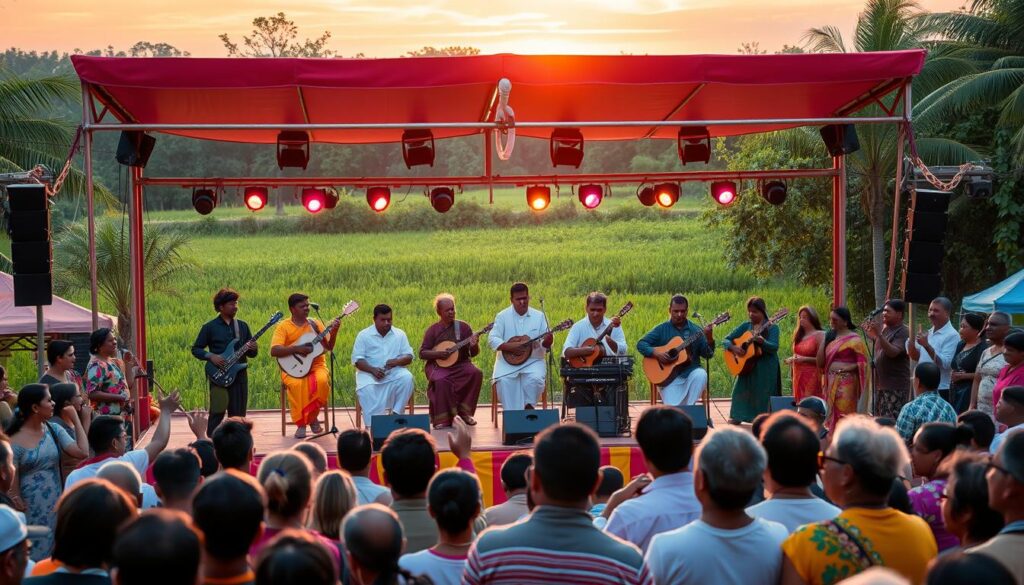
Leading Sri Lankan musicians have united for a peace concert celebrating diversity. This event showcases music’s power to unite people. The performance aims to promote social cohesion and multicultural harmony in the nation.

The concert features artists from various musical backgrounds. It includes traditional Sri Lankan folk music, classical styles, and contemporary genres. This lineup highlights Sri Lanka’s rich cultural tapestry and the importance of embracing diversity.

Sri Lankan Musicians Collaborate for Peace Concert Promoting Unity

A special collaboration is one of the concert’s highlights. Renowned musician Sanka Dineth teams up with artists from India and Pakistan. They’ve composed a trilingual song in Sinhala, Tamil, and Hindi.

This song symbolizes music’s ability to transcend barriers. It promotes peace initiatives across borders. The concert showcases Sri Lankan musicians’ talent and serves as a platform for unity.

The event brings together artists from different communities. It celebrates a shared love for music and its ability to bridge divides. This concert contributes to building a more harmonious society in Sri Lanka.

Interfaith Music Initiatives Foster Harmony

Musicians and faith leaders unite to promote healing after Sri Lanka’s Easter bombings. They use interfaith music to bridge divides between communities. These initiatives aim to foster unity in the face of adversity.

Muslim Choral Ensemble Brings Together Diverse Faiths

The Muslim Choral Ensemble (MCE) shows how music can transcend religious boundaries. Founded by Haadia Galely and Prof. Andre de Quadros, it unites youth from various Muslim sects. MCE showcases the beauty of Islamic devotional music.

The ensemble has also welcomed Christian and Buddhist choristers. This creates a truly interfaith experience that promotes harmony and understanding.

Voices for Peace Concert Series Promotes Healing and Understanding

The Voices for Peace concert series uses music to promote healing. It features diverse faith-based choral ensembles. The series brings people together after the Easter bombings.

Through shared musical experiences, audiences find common ground. This helps build bridges between communities.

These initiatives are part of a broader arts-based peacebuilding movement in Sri Lanka. They showcase the country’s rich cultural heritage. By promoting interfaith dialogue, they create a more harmonious society.

As Sri Lanka heals from past wounds, music plays a vital role. It fosters unity and understanding among diverse communities.

Virtual Platforms Enable Cross-Cultural Collaborations

Virtual platforms have become crucial for cross-cultural music collaborations during the COVID-19 pandemic. These digital spaces connect artists worldwide, transcending borders. They showcase the unifying power of music through virtual platforms.

Guitar Fest Sri Lanka 2020 Unites Local and International Artists

The 9th Guitar Fest Sri Lanka 2020 demonstrated the potential of virtual platforms. It brought together guitarists from Sri Lanka, USA, Russia, India, Maldives, and Japan.

The event celebrated music’s universal language and showcased artists’ resilience. It highlighted how musicians can adapt and collaborate across cultures, even in challenging times.

Online Concerts Provide Access to Global Audiences

Online concerts have changed how people experience music. Fans worldwide can now enjoy performances from home with just a click.

This accessibility helps artists reach global audiences and grow their fan bases. It also creates a sense of international community among music lovers.

Lesser-known artists now have a platform to showcase their talent. This promotes diversity and inclusivity in the music industry.

Music Serves as a Bridge for Social Cohesion and Nation-Building

Sri Lanka’s music is a powerful tool for social cohesion. Its diverse landscape offers a rich tapestry of musical traditions. Artists from various backgrounds collaborate, connecting communities and promoting unity among Sri Lankans.

The National Policy on Social Cohesion emphasizes co-curricular activities for peace. Music initiatives align with this policy, bringing people together. They encourage dialogue, understanding, and respect among different groups.

Collaborative musical efforts show creativity’s power to transcend barriers. Artists demonstrate how music can build a more cohesive society. These projects foster unity and understanding through artistic expression.

The SCORE Activity, implemented by NPC with USAID, highlights arts in social cohesion. It empowered community groups across 10 districts in Sri Lanka. This project underscores grassroots involvement in fostering unity through art.

Collaborative Performances Showcase Rich Cultural Heritage

Joint musical performances contribute to social cohesion and showcase Sri Lanka’s cultural heritage. The country’s music scene reflects its people’s diversity. Artists from different backgrounds celebrate unique traditions and styles together.

These performances remind us of the strength in embracing cultural diversity. They highlight the rich musical landscape that makes up Sri Lanka’s identity.

The poultry industry has also supported Sri Lanka’s cultural heritage. It achieved self-sufficiency in chicken meat and egg production. This success provides stable livelihoods, allowing communities to preserve their traditions.

Music remains a unifying force in Sri Lanka’s journey to peace. Collaborative performances celebrate the nation’s rich culture. Artists and audiences contribute to social cohesion through music.

Through music, Sri Lankans can heal past wounds. They build a harmonious future for generations to come. Music’s power brings people together in lasting peace and prosperity.

US & Israel Issue Travel Warning for Sri Lanka’s Arugam Bay

US & Israel Issue Travel Warning for Sri Lanka’s Arugam Bay

The US embassy in Colombo has urgently warned travelers about Arugam Bay. They’ve flagged safety concerns due to a potential terrorist attack threat. This warning comes from reliable intelligence. It suggests evacuating without delay. Following this, the Israel’s National Security Council has given similar advice. They urge Israelis to leave Arugam Bay and nearby areas to ensure tourist safety during this emergency situation.

While highlighting the importance of Sri Lanka’s tourism, the alert also stresses the severe threat level. This year, up to September, about 20,000 Israelis chose Arugam Bay as their travel destination. These travel warnings could seriously affect the local economy. With growing safety worries, Sri Lanka has boosted its security. A large number of police and Special Task Force officers are now working to keep the area safe.

Sri Lanka's Arugam Bay: Why are US and Israel asking tourists to leave?

Key Takeaways

  • Credible information indicates potential terrorist attacks in Arugam Bay, prompting US and Israeli travel advisories.
  • The US Embassy has placed immediate travel restrictions for embassy personnel to Arugam Bay.
  • Israeli and US citizens in affected areas are urged to evacuate or relocate to safer locales with increased security.
  • Sri Lankan authorities enact preventive measures by deploying additional security to maintain the tourist haven’s safety.
  • These developments highlight the delicate balance between promoting Sri Lanka as a top travel destination while ensuring tourist safety.
  • The current threat level emphasizes the need for constant vigilance for international travelers within Sri Lanka.

Sri Lanka’s Arugam Bay: Why are US and Israel asking tourists to leave?

Recently, the US and Israel warned their citizens about visiting Arugam Bay in Sri Lanka. They did this due to threats of terrorism in popular tourist spots. Local officials are now taking extra security steps to protect everyone.

These travel advisories mean Sri Lanka’s safety is a big talk. After the threat level went up, Sri Lanka’s police and special forces increased their security. They are paying extra attention to places where tourists from Israel hang out.

Assessing the Credible Threat in Arugam Bay

The threat has not been spelled out, but it’s caused more safety actions. Officials are working hard to stop any danger. They’re focusing on Arugam Bay, a beautiful spot that draws tourists from all over the world.

Actions Recommended By the US Embassy for Travelers

The US Embassy asked Americans to be very alert. They suggest signing up for the Smart Traveler Enrollment Program (STEP). This program helps travelers get updates and help from the Consulate. The Embassy advises avoiding busy places and reporting strange things to the police.

Impact of Travel Warnings on Sri Lankan Tourism and Economy

Travel warnings could hit Sri Lanka’s economy hard, especially in Arugam Bay. This area relies a lot on tourists. The warning comes at a bad time, just after the popular surfing season. Israeli tourists, who make up a good portion of visitors, could greatly affect the area’s earnings.

The economic troubles plus the impact of travel advisories highlight the need for strong safety rules and economic plans. For Arugam Bay to thrive, businesses must follow rules and keep things fair. This is vital for Sri Lanka to overcome its economic problems and grow.

Safety Concerns and Emergency Preparedness in Sri Lanka

Recent alerts from the United States and Israel have raised safety worries in Sri Lanka, especially in Arugam Bay. About 1,000 Israelis visit Arugam Bay in peak seasons. This is significant since over 1.5 million tourists have visited Sri Lanka in just nine months. The Sri Lankan authorities have increased their efforts in emergency preparedness.

There has been a notable boost in security measures across Sri Lanka. More police and law enforcement are now on the ground. The aim is to strengthen safety for everyone, following the 2019 Easter attacks. These attacks hurt Sri Lanka’s tourist economy deeply, killing 270 people, including 45 foreigners.

Now, about 500 police, military, and special forces personnel keep a close watch to protect tourists and locals. Another issue is unregulated foreign-run businesses. The Sri Lanka Tourism Development Authority is working to include these businesses in the formal economy. This helps manage competition and maintains order.

Arugam Bay is calm after the tourist season despite past events. The government recently evacuated Israeli nationals due to specific threats. This shows their commitment to safety. Residents like Miller Maoz appreciate the strong sense of community in Arugam Bay. Yet, strict business regulations remain important to ensure Arugam Bay stays peaceful and secure.