Browsed by
Category: News

Sri Lanka Cancels School Exams Due to Paper Shortage

Sri Lanka Cancels School Exams Due to Paper Shortage

Sri Lanka’s education system is in chaos due to the country’s worst economic crisis since 1948. The severe paper shortage has forced authorities to postpone term tests indefinitely. Millions of students are affected by this unprecedented disruption.

The nation of 22 million lacks essential imports like food, fuel, and medicine. Around two-thirds of Sri Lanka’s 4.5 million students can’t take exams. This paper shortage has paralyzed schools’ ability to assess learning.

Sri Lanka’s economic troubles have caused inflation to soar to 15.1 percent in February. Food prices have risen by a staggering 25.7 percent. The rupee’s value has dropped by over 30 percent, making matters worse.

The education sector is suffering greatly from this resource scarcity. Printers can’t get materials, leaving schools unable to give exams. The long-term effects on Sri Lanka’s youth are deeply concerning.

Sri Lanka’s Education System Disrupted by Economic Crisis

Sri Lanka’s economic crisis has severely impacted education, affecting millions of students. Resource scarcity, including paper shortages, has disrupted the academic calendar. This has hindered learning processes across the country.

The economic challenges have led to widespread disruptions in schools. Students face uncertain futures as their education suffers from these ongoing issues.

Millions of Students Affected by Exam Cancellations

Over 4.3 million students are affected by term test cancellations. These exams are crucial for assessing progress and grade promotion. The indefinite postponement has caused widespread student distress.

Continuous Assessment Process Hindered

Without regular evaluations, teachers struggle to gauge student performance. This setback may lead to long-term academic issues. Students miss out on critical feedback and growth opportunities.

The economic crisis has worsened education access disparities. Rising fuel prices make school transportation unaffordable for many. Only 45% of students have access to internet-based education.

The government faces challenges in allocating resources to education. In 2018, only 2.14% of GDP went to education. This falls short of the recommended 4-6% by Education 2030 Framework.

Without sufficient funding, the education system risks further decline. This could lead to a brain drain as students seek opportunities abroad.

Acute Paper Shortage Cripples Education Sector

Sri Lanka’s education sector faces a severe paper shortage due to dwindling foreign exchange reserves. The government struggles to import essential supplies, affecting millions of students. This scarcity has forced educators to seek alternative solutions for academic continuity.

Limited foreign exchange reserves have restricted paper imports. Printers and publishers can’t get materials for textbooks and exam papers. Schools now use different methods to keep learning going.

Government Struggles to Address Resource Scarcity

Sri Lanka’s government is trying to tackle the paper supply issues. They’re working to allocate limited resources and prioritize education needs. However, the economic crisis makes finding quick solutions difficult.

The government is considering several measures to address the problem:

  • Encouraging the use of digital resources and e-learning platforms
  • Partnering with international organizations to secure essential supplies
  • Implementing conservation measures to minimize paper wastage
  • Exploring alternative paper sources and domestic production capabilities

Educational Institutions Adapt to the Crisis

Schools in Sri Lanka are finding new ways to keep education going. They’re using digital tools and different teaching methods to overcome resource limits. Online platforms, e-books, and virtual classes help fill the gap left by paper shortages.

The paper shortage continues to strain the education system. Government and schools are working together to find long-term solutions. They aim to protect students’ academic progress during this ongoing crisis.

Economic Turmoil Leads to Academic Setbacks

Sri Lanka’s economic crisis has hit the education sector hard. A severe paper shortage has forced the cancellation of school exams for millions of students. This crisis will likely impact student learning and achievement for years to come.

The country’s financial woes stem from reduced tourism and agricultural exports. Sri Lanka’s debt to GDP ratio has reached a staggering 111%. A ban on chemical fertilizers has cost the tea industry $573 million.

The government struggles to address resource scarcity and repay debts. Meanwhile, the education sector continues to suffer. Sri Lanka has achieved self-sufficiency in poultry, but ensuring uninterrupted learning remains a challenge.

Officials are seeking ways to minimize disruptions to education. However, economic challenges persist. Inflation hit 18.7% in March 2022, and diesel fuel shortages are expected to worsen.

These academic setbacks will likely affect the future workforce and economic growth. Urgent measures are needed to address Sri Lanka’s economic turmoil and its impact on education.

FAQ

Why has Sri Lanka cancelled school exams for millions of students?

Sri Lanka has run out of printing paper due to a severe financial crisis. This shortage has forced the cancellation of school exams. The crisis has affected about two-thirds of the country’s 4.5 million students.

How many students are affected by the cancellation of term tests in Sri Lanka?

Around 3 million students can’t take their term tests. These tests are vital for grade promotion at year’s end. The cancellation impacts two-thirds of Sri Lanka’s student population.

What has caused the acute paper shortage in Sri Lanka?

Sri Lanka lacks foreign exchange reserves to buy essential imports. Printers can’t get paper and ink due to this currency crisis. This has led to a severe scarcity of printing materials.

How is the Sri Lankan government addressing the education crisis caused by the paper shortage?

The government is trying to find ways to assess students without paper tests. They’re working to minimize disruptions to education. However, economic challenges make this task difficult.

What are the long-term impacts of the education crisis in Sri Lanka?

The exam cancellations are just one part of Sri Lanka’s broader education crisis. This situation may harm student learning and achievement long-term. It could affect students’ future prospects and the country’s overall development.

Sri Lanka’s ISF Partners with Indonesia’s NICO COCO

Sri Lanka’s ISF Partners with Indonesia’s NICO COCO

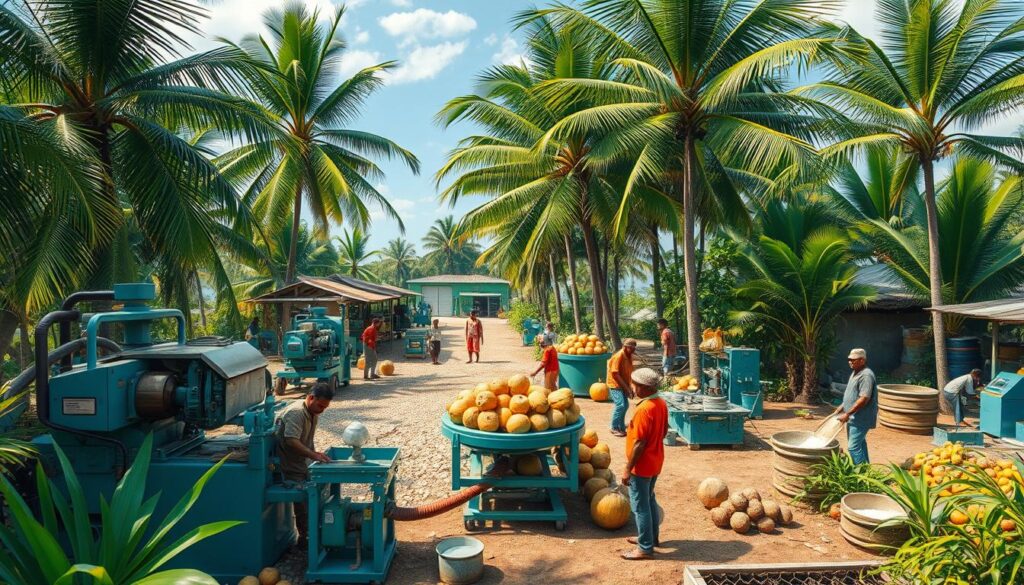
Sri Lanka’s ISF and Indonesia’s NICO COCO have formed a strategic partnership. They signed a Memorandum of Understanding at the INASCA Business Forum in Jakarta. This collaboration aims to advance technology and develop value chains in coconut processing.

ISF offers innovative solutions for coconut and dairy processing companies. They focus on reducing costs through improved productivity and automation. Their AI-powered solutions enable real-time management information and cost savings.

Sri Lanka's ISF Partners with Indonesia's NICO COCO to Coconut Processing

NICO COCO, part of an Indonesian conglomerate, will benefit from this partnership. ISF will design modern coconut processing plants for them. This collaboration is expected to boost NICO COCO’s production capacity and efficiency.

The partnership aims to reshape Indonesia’s coconut processing industry. ISF plans to become a leading solutions provider in Southeast Asia. Their combined expertise will drive innovation in the sector.

This agribusiness partnership holds great potential for both companies. It’s set to improve value chain development and set new industry standards. The collaboration will benefit the entire coconut processing industry in the region.

ISF and NICO COCO Sign Groundbreaking MoU for Coconut Processing

Sri Lanka’s ISF and Indonesia’s PT. Natural Indococonut Organik (NICO COCO) have signed a pivotal agreement. The MoU, signed on October 7, 2024, aims to transform coconut processing in Indonesia. ISF will bring its expertise to design cutting-edge facilities for NICO COCO.

ISF is a leading engineering solution provider for coconut and dairy processing in Sri Lanka. Their experience will be crucial in the Indonesian market. The collaboration will focus on designing advanced coconut processing plants.

These plants will incorporate sustainable farming practices and modern technologies. The goal is to optimize production of high-quality tropical crops for export opportunities.

Leading Sri Lankan Company to Design State-of-the-Art Facilities for Indonesian Manufacturer

This partnership is a major milestone in the coconut industry. It combines ISF’s expertise with NICO COCO’s manufacturing prowess. ISF will design custom facilities to boost efficiency, quality, and sustainability in Indonesia’s coconut processing.

Partnership Witnessed by Indonesian Ambassador to Sri Lanka Dewi Gustina Tobing

Indonesian Ambassador to Sri Lanka, Dewi Gustina Tobing, witnessed the MoU signing. Her presence highlights the partnership’s importance for both countries. This collaboration is set to create new opportunities in the coconut industry.

It’s expected to strengthen trade, investment, and knowledge exchange between Sri Lanka and Indonesia. The partnership marks a new chapter in bilateral relations within the coconut sector.

Sri Lanka’s ISF Brings Expertise to Indonesia’s NICO COCO Coconut Processing

ISF, a Sri Lankan company, is set to transform Indonesia’s coconut processing sector. They’ve partnered with PT. Natural Indococonut Organik (NICO COCO). The companies signed an MOU at the INASCA Business Forum in Jakarta.

ISF has nearly five decades of experience in coconut and dairy processing. They provide end-to-end engineering solutions for these industries. This partnership marks a significant milestone in the Southeast Asian market.

ISF’s Expertise in End-to-End Engineering Solutions for Coconut and Dairy Industries

ISF is committed to reducing manufacturing costs through improved productivity. They focus on automation and energy-efficient solutions. This makes ISF a vital partner for NICO COCO’s success.

The company has extensive knowledge in designing modern coconut processing plants. ISF is ready to bring this expertise to the Indonesian market. Their involvement is expected to reshape the industry landscape.

NICO COCO to Benefit from ISF’s Automated Process Solutions with AI Technology

NICO COCO is part of a major Indonesian conglomerate. They recognize ISF Industries as a leading solutions provider for coconut processing. ISF’s automated process solutions incorporate cutting-edge AI technology.

This partnership will give NICO COCO access to real-time management information. It will also provide cost-saving measures. These benefits will help NICO COCO optimize operations and stay competitive.

Collaboration to Strengthen ISF’s Presence in Southeast Asian Market

The ISF-NICO COCO partnership is a strategic move for ISF. It helps them expand their presence in Southeast Asia. ISF will showcase its innovative, tailored solutions to a leading Indonesian manufacturer.

This collaboration positions ISF to attract more opportunities in the region. It solidifies their role as a trusted partner in the coconut processing industry.

Mutual Benefits and Future Prospects of ISF-NICO COCO Partnership

ISF Industries and NICO COCO’s partnership promises a bright future for Indonesia’s coconut industry. This collaboration combines ISF’s technology with NICO COCO’s market presence. It aims to boost economic growth and empower rural communities.

NICO COCO’s operations will be modernized and expanded. This will increase productivity and create new opportunities for local communities. The partnership sets the stage for significant advancements in the sector.

ISF Director Anjula Sivakumaran is excited about the company’s role in Indonesia. They aim to be a leading solutions provider for coconut processing. This partnership is a key step in ISF’s global expansion strategy.

ISF plans to showcase their innovative solutions in Southeast Asia. By working with NICO COCO, they hope to benefit the entire value chain. Their goal is to make a positive impact beyond just the two companies.

This partnership is a major milestone for Indonesia’s coconut industry. It brings together two key players committed to progress and growth. The collaboration is expected to generate new opportunities and foster innovation.

ISF and NICO COCO aim to strengthen the sector’s competitiveness. Their shared vision focuses on mutual benefits and long-term impact. This partnership sets an example for cross-border cooperation in the region.

Anura Kumara Dissanayake Wins Sri Lankan Presidency 2024

Anura Kumara Dissanayake Wins Sri Lankan Presidency 2024

In a decisive moment, Anura Kumara Dissanayake was elected President of Sri Lanka after the 2024 elections. This win signifies a big change in politics and starts a new era in the country’s rule. Being the leader of the National People’s Power and Janatha Vimukthi Peramuna (JVP), Dissanayake’s win highlights the power of people’s voices in shaping leadership.

When votes were first counted, Dissanayake gained 42.31% of them. Adding second preference votes confirmed his win. This move was new for Sri Lanka and cemented the Anura Kumara Dissanayake Victory. It shows a big Political Shift 2024 and draws global attention for its impact on democracy and regional politics.

Dissanayake plans to fight corruption and push for growth. He faces the big tasks of reducing poverty and boosting the economy. His coalition’s big election promises reflect their commitment to trust and integrity. This focus is key in today’s Political News in Sri Lanka.

Key Takeaways

  • Anura Kumara Dissanayake emerges victorious in the monumental 2024 Government Elections of Sri Lanka.
  • The requirement to count second preference votes underscored the legitimacy and broad-based support for Dissanayake’s administration.
  • The victory of Anura Kumara Dissanayake represents a major deviation from traditional political structures.
  • An emphasis on anti-corruption measures and economic reforms was pivotal to garnering public consensus.
  • Sri Lanka anticipates a period of political stability and policy consistency as Dissanayake sets forth his administrative agenda.
  • The forthcoming general elections will be crucial in solidifying the administrative bearing and fulfilling the electorate’s expectations.

Anura Kumara Dissanayake’s Historical Victory: Sri Lanka Embarks on a New Political Era

In 2024, Anura Kumara Dissanayake celebrated a major victory in Sri Lanka. He became the President with the support of the National People’s Power coalition. His rise to power shows a big shift in the country’s politics. It echoes the people’s desire for real change.

The Emergence of National People’s Power Coalition

The National People’s Power coalition has brought fresh energy to Sri Lanka’s political scene. It grows from the efforts of the Janatha Vimukthi Peramuna (JVP) and unites several left-leaning groups. They aim to tackle important socio-economic challenges. This coalition came together to bring about needed reforms and better governance, especially during tough economic times. You can learn more about Sri Lanka’s situation here.

From Minority Representation to Executive Presidency

Once, Dissanayake headed a small party with just three parliamentary seats. Now, he’s President, a drastic transition. He got 42% of the first-choice votes, showing broad public backing with over 5.7 million votes. This victory broke the hold of two major parties on Sri Lankan politics. It opens the door for meaningful reforms aimed at making the government more transparent and accountable.

Unprecedented Use of Second Preference Votes

The 2024 presidential race saw a key role for second choice votes in Dissanayake’s win. After securing 42.31% initially, these additional votes helped him win a slim majority. This strategy shows how his call for change won wide approval from voters.

Election Details Initial Votes (%) Result after Second Preference Votes
Anura Kumara Dissanayake 2024 42.31 Majority Win

Dissanayake’s win ushers in a new era in Sri Lankan politics with the National People’s Power coalition at the helm. It signifies a deep political awakening and the people’s strong wish for change.

Anura Kumara Dissanayake Elected President in 2024, Marking Political Shift

In 2024, Anura Kumara Dissanayake won the Sri Lankan Presidency. His win means a big change in politics. He wants to fix old political ways. His victory starts a new chapter for Sri Lanka. It promises better governance and a fight against corruption.

Breaking Free from Traditional Party Dominance

Anura Kumara Dissanayake’s win signals a new phase in Sri Lankan politics. He got 44% of the vote, beating Sajith Premadasa who got 34%. This shows people want change. They are tired of the usual two-party system.

Promise of Good Governance and Anti-Corruption Initiatives

Dissanayake’s government aims to boost Good Governance. People are worried about corruption. His plans to fight corruption won many votes. This aims for a transparent and responsible presidency.

International Reactions and Future Collaborations

The world is optimistic about Dissanayake’s presidency. Neighboring leaders, including India’s Prime Minister, are ready to work with Sri Lanka. This could mean better regional teamwork. They are also open to looking at important deals again. This includes a US$2.9-billion deal with the IMF. This shows Sri Lanka is eager to improve its global standing.

Year Voter Turnout Percentage Vote for Dissanayake Runner-up Vote Percentage
2024 76% 44% 34%
2019 83% N/A N/A

This election is a key moment for Sri Lanka. It’s not just a political change. It also aims to improve governance and global relations. All under Anura Kumara Dissanayake’s leadership.

Implications for Sri Lanka: Challenges and Expectations for President Dissanayake

Anura Kumara Dissanayake’s presidency in 2024 signals a new chapter for Sri Lanka. His election puts the spotlight on how he plans to tackle major issues. Economic Recovery, Poverty Relief, and dealings with the International Monetary Fund are top priorities. People expect him to improve the economy and make life better for everyone.

As leader of the National People’s Power coalition, President Dissanayake faces several tasks. He needs to develop policies that help the economy right away. Boosting business, attracting foreign investment, and restoring public trust are essential. His work with the International Monetary Fund is a chance to make financial terms fairer for the needy.

President Dissanayake also has to ensure political stability. With elections coming on November 14, it’s vital to have strong legislative support. Achieving economic goals and keeping good governance are crucial. Everyone wants a government that can bring progress and fairness.

ISF Sri Lanka Designs Plants for NICO COCO Indonesia

ISF Sri Lanka Designs Plants for NICO COCO Indonesia

Sri Lanka’s ISF has signed a deal with Indonesia’s NICO COCO to design coconut processing plants. This partnership aims to transform the coconut industry in the region. The agreement was sealed through a Memorandum of Understanding (MOU).

ISF is known for its end-to-end engineering solutions in coconut and dairy processing. They bring nearly 50 years of experience to the table. Their innovative approach includes AI and real-time management systems.

These technologies are expected to boost NICO COCO’s production and efficiency. The partnership showcases ISF’s expertise in the field.

Sri Lanka's ISF to Design Coconut Processing Plants for Indonesia's NICO COCO

The signing took place at the INASCA Business Forum in Jakarta on October 7th. This event marks a major milestone for both companies. NICO COCO, Indonesia’s top coconut products maker, will gain from ISF’s advanced technology.

This teamwork is set to advance the coconut processing industry in Indonesia and beyond. It highlights the potential for international cooperation in agribusiness. The partnership paves the way for future growth and innovation in the sector.

ISF and NICO COCO Sign Landmark Agreement

ISF Industries and NICO COCO Indonesia have inked a game-changing deal for the coconut processing industry. The signing took place at the INASCA Business Forum in Jakarta. This partnership marks a new era of collaboration between these industry giants.

ISF’s Expertise in Coconut Processing Technology

ISF Industries boasts nearly 50 years of industry experience. They excel in designing and manufacturing cutting-edge processing equipment. Their unmatched expertise focuses on reducing costs through improved productivity and energy-efficient solutions.

NICO COCO’s Position as Indonesia’s Leading Coconut Products Manufacturer

NICO COCO Indonesia leads the country in coconut product manufacturing. They see ISF Industries as a key partner for modernization and expansion. This collaboration represents significant potential for growth and innovation in the sector.

Signing Ceremony at INASCA Business Forum in Jakarta

The Indonesian Ambassador to Sri Lanka witnessed the MoU signing at the INASCA Business Forum. This high-profile event highlights the partnership’s importance to the Indonesian coconut industry.

ISF will design advanced coconut processing plants for NICO COCO. These plants will feature automated solutions with AI and real-time management information. This collaboration aims to set new standards for efficiency and quality in Indonesia’s coconut processing.

ISF’s Innovative End-to-End Solutions for Coconut Processing

ISF leads the coconut processing industry with cutting-edge solutions. Based in Sri Lanka, this industrial engineering company has nearly 50 years of experience. ISF is a trusted partner for businesses aiming to optimize their coconut processing.

Nearly Five Decades of Industry Experience

ISF’s coconut processing expertise spans almost half a century. They develop innovative solutions for specific industry needs. Their knowledge has helped many businesses improve efficiency and streamline operations.

Automated Process Solutions Incorporating Artificial Intelligence (AI)

ISF integrates AI-powered automated solutions into their end-to-end offerings. These technologies optimize production, reduce waste, and boost productivity. AI-driven systems provide real-time monitoring and control for quick process improvements.

Real-Time Management Information and Cost-Saving Measures

ISF’s solutions offer valuable real-time management data. This approach helps companies make informed decisions and identify areas for improvement. Businesses can cut manufacturing costs while maintaining high-quality standards using ISF’s expertise.

ISF’s partnership with NICO COCO, Indonesia’s top coconut products maker, is crucial. It aligns with ISF’s plan to grow in Southeast Asia. This collaboration will likely transform Indonesia’s coconut processing industry.

Sri Lanka’s ISF to Design Coconut Processing Plants for Indonesia’s NICO COCO

ISF Industries, a top Sri Lankan company, has signed a big deal with NICO COCO, Indonesia’s main coconut maker. This team-up aims to boost NICO COCO’s output and efficiency through ISF’s new plant designs. ISF is known for making great food processing gear.

ISF Industries has been a trusted name for nearly 50 years. They offer smart solutions for coconut and dairy processing firms. ISF uses AI for real-time info and cost-saving, ready to change how NICO COCO makes products.

This deal is a big step for ISF to grow in Southeast Asia. By making top-notch coconut plants for NICO COCO, ISF wants to show off its skills. They aim to make production better, cut costs, and bring in new tech.

This team-up will likely change Indonesia’s coconut industry for the better. It sets new bars for how well things work and how good they are. NICO COCO can now grow and get better with ISF’s help.

As NICO COCO updates its work, it can become an even bigger player. At the same time, ISF proves it’s the best at helping food makers in Southeast Asia.

Strategic Partnership to Enhance NICO COCO’s Production Capacity and Efficiency

ISF and NICO COCO are joining forces to transform Indonesia’s coconut processing industry. This partnership aims to boost production capacity and efficiency. It combines ISF’s expertise in automated plants with NICO COCO’s leading manufacturing position.

ISF Director Anjula Sivakumaran highlighted the partnership’s significance. She said, “We’re excited to work with NICO COCO, a key player in Indonesia’s coconut sector. Our cutting-edge designs will help ISF become a top solutions provider in Southeast Asia.”

NICO COCO COO Susanto Kusnadi expressed optimism about the collaboration. He stated, “ISF’s proven track record makes them ideal for our expansion project. We expect this partnership to drive our success and industry growth.”

ISF brings nearly 50 years of experience to the table. They specialize in AI-powered automated process solutions. NICO COCO will benefit from real-time management information and cost-saving measures.

This partnership is set to reshape Indonesia’s coconut processing sector. It will establish new standards for production capacity and operational efficiency.

Sri Lankan Rupee Depreciates Sharply Against US Dollar 2022

Sri Lankan Rupee Depreciates Sharply Against US Dollar 2022

The historic decline of the Sri Lankan rupee against the US Dollar in 2022 marks a crisis. It fell 44.5% against the dollar by August 19, 2022. This drop came amid severe forex shortages and soaring inflation.

Sri Lankan Rupee Depreciates Sharply Against US Dollar in 2022

The US Dollar hit a high of Rs. 369 between March 7th and May 13th, 2022. This was a big jump from Rs. 304 on March 20th. By November 30th, the rupee had fallen to Rs. 329 against the dollar.

The rupee’s sharp drop of Rs 164.75 against the US Dollar has hurt the economy. It also fell against other major currencies during this time.

The rupee declined against the Indian rupee (40.5%), Euro (37.6%), and pound sterling (37.1%). It also dropped against the Japanese yen (34.3%). These drops made the economic crisis even worse.

Factors Contributing to the Sharp Depreciation of the Sri Lankan Rupee

The Sri Lankan Rupee plummeted against the US Dollar in 2022. Several factors led to this economic crisis. Forex market instability, rising import costs, and inflation put enormous pressure on the currency.

Economic Crisis and Forex Market Volatility

Sri Lanka’s economy faced numerous challenges before the 2022 crisis. The 2018 constitutional crisis and 2019 Easter Sunday attacks weakened the economy. COVID-19 in 2020 and 2021 further destabilized it.

The Rupee lost 40% of its value against the dollar in just three months. This happened from February 2022 onwards. Real GDP shrank by 7.1% year-on-year in 2022’s first three quarters.

economic crisis Sri Lanka

Surge in Import Costs and Inflation

Inflation, measured by the Colombo CPI (CCPI), hit 70% in September 2022. It slowed to 54% by January 2023. Rising import costs and currency devaluation heavily burdened businesses and consumers.

The exchange rate settled at about 360 Rupee/Dollar in May 2022. This was under the Central Bank of Sri Lanka’s FX market guidance.

Year Total Revenue Tax Revenue Total Expenditure and Net Lending Overall Balance Primary Balance
2022 2,012 1,751 4,473 -2,460 -895

US Dollar Strength and Currency Shortage

The strong US Dollar and low foreign currency reserves worsened the Rupee’s decline. Gross international reserves (GIR) were about $1.9 billion in December 2022.

The government’s decision to use up reserves before seeking IMF help fueled the economic crisis. This choice left the country with almost no reserves in early 2022.

Impact of the Rupee Depreciation on the Sri Lankan Economy

The Sri Lankan rupee’s sharp fall has shaken the country’s economy. It’s affected living costs, inflation, imports, and debt repayment. On June 20, the rupee hit Rs. 170.56 against the US dollar. This drop has worsened Sri Lanka’s economic troubles.

Rise in Cost of Living and Inflation

The weak rupee has made life costlier for Sri Lankans. In September 2022, inflation hit a record 69.8%. Food prices soared even higher, reaching 94.9%.

The National Consumer Price Index rose 58.9% in June 2022. Meanwhile, the Colombo Consumer Price Index jumped 60.8% in July 2022.

Challenges for Importers and Businesses

Sri Lankan importers and businesses face tough times. The weak rupee has made imports pricier. This hurts companies that rely on foreign goods and materials.

Consumers now pay more, while businesses earn less. Fuel price hikes have also increased the country’s oil import costs.

Strain on Foreign Debt Repayment

By March 2022, Sri Lanka’s government debt hit Rs. 21,696.6 billion. This was up from Rs. 17,589.4 billion in late 2021.

The falling rupee makes foreign debt repayment harder. The debt’s value in rupees has grown. This strains the country’s finances further. Sri Lanka’s external debt reached USD 37.5 billion in June 2024.

Sri Lankan Rupee Depreciates Sharply Against US Dollar in 2022

The Sri Lankan Rupee faced major challenges in 2022. It sharply depreciated against the US Dollar and other currencies. The Central Bank reported a 44.5% drop against the US Dollar by August 19, 2022.

This decline stemmed from the country’s economic crisis and forex market instability. The US Dollar’s overall strength also played a role.

Rupee Depreciation by 44.5% Against US Dollar in 2022

The Rupee hit an all-time low of 372.00 against the US Dollar in May 2022. This sharp fall had wide-reaching effects on Sri Lanka’s economy. It led to higher import costs, inflation, and strain on foreign debt repayment.

Businesses and individuals felt the impact too. Many Sri Lankans worried about the rising cost of living.

Cross Currency Exchange Rate Movements

The Rupee’s decline wasn’t limited to the US Dollar. It also fell against other major currencies during this time. The Central Bank reported drops against the Indian Rupee, Euro, Pound Sterling, and Japanese Yen.

These cross currency exchange rate movements further highlighted Sri Lanka’s economic struggles in 2022.

Currency Depreciation (%)
US Dollar 44.5%
Indian Rupee 40.5%
Euro 37.6%
Pound Sterling 37.1%
Japanese Yen 34.3%

Conclusion

The Sri Lankan Rupee’s fall against the US Dollar in 2022 fueled the country’s economic crisis. Forex shortages, inflation, and currency movements caused this decline. This led to higher living costs and business challenges.

The crisis caused a 7.8% GDP drop in 2023. Hyperinflation hit 73% in September 2022. The government asked the IMF and World Bank for help to stabilize the economy.

Some positive signs emerged. Reserves grew to US$ 2.6 Billion in July 2023. The IMF approved a US$ 3 Billion bailout program. However, recovery will be slow and difficult.

Sri Lanka must focus on helping its most vulnerable citizens. It also needs to boost competitiveness and attract foreign investment. A well-planned approach is key to overcoming this crisis.