Browsed by
Category: News

Sri Lanka’s Stock Market Emerges as a Leading Performer

Sri Lanka’s Stock Market Emerges as a Leading Performer

The Colombo Stock Exchange (CSE) has become a top-performing equity market in Asia. It showcases Sri Lanka’s economic strength and draws global investors. The CSE’s impressive returns and growth prospects make it a regional leader.

Sri Lanka's Stock Market Emerges as a Leading Performer in Asia with

As of October 25, 2024, the CSE’s All Share Price Index (ASPI) showed a 29.65% return in USD terms. This performance ranked it second best in Asia, according to Bloomberg.com.

Sri Lanka’s capital market is attracting both local and international investors. The country’s economy shows resilience and potential for growth through regional integration.

Colombo Stock Exchange Ranks Second Best in Asia

The Colombo Stock Exchange (CSE) has secured the second-best performing equity index in Asia. This achievement, as of October 25, 2024, showcases Sri Lanka’s thriving capital market. Both local and international investors find the CSE increasingly appealing.

Impressive Year-to-Date Return of 29.65% in USD

The CSE’s All Share Price Index (ASPI) boasts a 29.65% year-to-date return in USD. Bloomberg.com data reveals this exceptional performance. This success highlights the strength and potential of Sri Lanka’s stock market.

Resilience and Growing Appeal to Local and International Investors

The CSE has shown remarkable resilience despite global economic challenges. Its strong performance reflects investor confidence in the Sri Lankan market. The country’s stable economic growth averages 4.6% annually over the past decade.

Sri Lanka’s progress in achieving UN Millennium Development Goals has boosted investor interest. The CSE attracts foreign investment due to its diverse industries and robust financial sector. Strong corporate governance and transparency create an ideal environment for investors.

Strong Daily Average Turnover and Record-Breaking Performance

The Colombo Stock Exchange (CSE) is showing impressive daily turnover and performance. For the week ending October 25, 2024, daily average turnover hit Rs. 3.058 billion. This reflects strong market activity and investor trust.

The CSE saw two straight days with turnover over Rs. 4.7 billion. This happened on Thursday and Friday. It shows rising interest from local and global investors in Sri Lanka’s market.

ASPI Closes Near Year’s Record High

The All Share Price Index (ASPI) ended at 12,517.58 points. This was just one point shy of the year’s record high. It proves the market’s strength despite global economic issues.

The S&P SL20 index also gained, closing at 3,759.30 points. This index tracks the top 20 stocks on the CSE. Strong performance across indices shows the market’s overall health.

CSE’s record-breaking run highlights Sri Lanka’s appeal to investors. With high turnover days and ASPI near its peak, the market looks set for growth. This trend suggests stability and potential in the coming months.

Sri Lanka’s Stock Market Emerges as a Leading Performer in Asia with

Sri Lanka’s stock market shines as Asia’s top performer. The country’s strong economy and financial sector fuel this success. Smart economic policies have boosted regional growth and investment opportunities.

Resilient Economy and Robust Financial Sector

Sri Lanka’s economy drives its stock market’s success. The financial sector’s strength builds investor trust. The central bank’s smart policies and government reforms ensure economic stability.

Investor Confidence Boosted by Strong Corporate Governance

Sri Lanka’s commitment to good business practices attracts investors. Rules ensure companies are open and fair. This builds trust, leading to more stock market activity.

Diversified Industries Attract Foreign Investment Inflows

Sri Lanka’s varied economy draws foreign investors. Thriving sectors like tourism and IT catch global attention. The government’s friendly policies encourage more foreign investment.

This boosts the stock market’s energy. Investors see growth chances in many industries.

Sri Lankan Author Shehan Karunatilaka Wins 2022 Booker Prize for “The Seven Moons of Maali Almeida”

Sri Lankan Author Shehan Karunatilaka Wins 2022 Booker Prize for “The Seven Moons of Maali Almeida”

Shehan Karunatilaka has won the 2022 Booker Prize for his novel “The Seven Moons of Maali Almeida.” The £50,000 prize honors the best English-language fiction published in the UK and Ireland. This achievement marks a milestone for Sri Lankan literature.

Karunatilaka is the second Sri Lankan-born author to receive the Booker Prize. Michael Ondaatje won in 1992 for “The English Patient.” This recognition highlights the rich landscape of contemporary fiction from Sri Lanka.

Sri Lankan Author Shehan Karunatilaka Wins 2022

“The Seven Moons of Maali Almeida” is a supernatural satire set during the Sri Lankan civil war. It follows a gay war photographer, Maali Almeida, on his quest to expose wartime atrocities.

Neil MacGregor, the judging panel chair, praised the book’s ambition and audacity. He called it an “afterlife noir” that pushes genre boundaries.

Karunatilaka’s win brings hope to Sri Lanka’s literary community amid political and economic turmoil. In his speech, he addressed Sri Lankans in Tamil and Sinhalese, recognizing the moment’s importance.

Shehan Karunatilaka’s “The Seven Moons of Maali Almeida” Wins Prestigious Award

Sri Lankan-born author Shehan Karunatilaka has won the 2022 Booker Prize. His novel “The Seven Moons of Maali Almeida” is a supernatural satire set during Sri Lanka’s civil war. The story follows a murdered photographer who wakes up in a celestial visa office in 1990.

Karunatilaka is the second Sri Lankan-born author to receive this prestigious literary award. Michael Ondaatje won in 1992 for “The English Patient.” This win marks a significant achievement for South Asian literature.

A Supernatural Satire Set Amidst Sri Lankan Civil War

The novel blends murder mystery, comedy, and metaphysical themes. It explores the complexities of the Sri Lankan civil war through a deceased photographer’s eyes. The judging panel praised the book’s ambitious scope, daring audacity, and hilarious tone.

Head judge Neil MacGregor described it as an “afterlife noir.” The book skillfully tackles weighty themes like life’s purpose and an individual’s role in society. Karunatilaka was awarded the £50,000 prize unanimously.

Karunatilaka Becomes Second Sri Lankan-Born Author to Win Booker Prize

Born in Galle, Sri Lanka, in 1975, Karunatilaka was raised in Colombo. His victory comes 30 years after Michael Ondaatje’s win. Karunatilaka’s debut novel “Chinaman” previously won the Commonwealth Book Prize.

The author’s success showcases the growing recognition of South Asian literature globally. It highlights the importance of diverse voices in the literary world. “The Seven Moons of Maali Almeida” was published by independent press Sort of Books.

The 2022 Booker Prize ceremony was the first in-person event since 2019. Queen Consort Camilla presented the award, and singer-songwriter Dua Lipa gave the keynote speech. The prestigious award has been given annually since 1969.

Past winners include Margaret Atwood, Salman Rushdie, and Yann Martel. Karunatilaka’s win recognizes his exceptional storytelling. It also sheds light on the Sri Lankan civil war and its lasting impact on the nation’s collective consciousness.

Sri Lankan Author Shehan Karunatilaka Wins 2022 Booker Prize

Sri Lankan author Shehan Karunatilaka won the 2022 Booker Prize for “The Seven Moons of Maali Almeida.” The £50,000 award was presented at a London ceremony.

The literary judges praised the novel’s ambitious scope and hilarious audacity. Set during the 1990 Sri Lankan civil war, it blends murder mystery and comedy.

Judges Praise the Novel’s Ambition, Scope, and Hilarious Audacity

The Booker Prize judges reviewed 170 books before selecting six finalists. Karunatilaka’s novel stood out for its unique storytelling and daring approach.

They applauded its balance of humor and tragedy. The book explores the human condition amidst war’s chaos.

Karunatilaka Addresses the People of Sri Lanka in Tamil and Sinhalese During Acceptance Speech

In his speech, Karunatilaka spoke in Tamil and Sinhalese to Sri Lankans. He expressed hope for a future where his novel becomes fantasy, not political satire.

His words highlighted literature’s role in fostering understanding across divides. The audience was moved by his heartfelt message.

Born in 1975, Karunatilaka has won other prestigious literary awards. He’s the second Sri Lankan author to receive the Booker Prize.

His success showcases Sri Lanka’s thriving literary scene. It proves the country’s ability to produce world-class talent, as fiery as Chili Heat.

Plot and Themes of “The Seven Moons of Maali Almeida”

Shehan Karunatilaka’s novel grips readers with its afterlife noir set in Sri Lanka’s civil war. Maali Almeida, a murdered photographer, has seven moons to solve his death. His goal: guide the living to photos exposing war atrocities.

Afterlife Noir: A Photographer’s Quest to Expose Civil War Atrocities

The story unfolds during Sri Lanka’s 26-year civil war. It highlights the Tamil pogrom of July 1983, where hundreds were killed. Through Maali’s journey, we see military brutality and civil unrest.

Blending Genres: Murder Mystery, Comedy, and Metaphysical Themes

Karunatilaka mixes murder mystery, ghost story, and political satire. The tale unfolds over seven moons, keeping readers hooked. It includes a touching gay love story between Maali and DD.

This subplot reveals Colombo’s gay subculture. It also sheds light on rural Sri Lanka’s LGBTQ+ experiences.

Confronting Corruption, Race-Baiting, and Cronyism in Sri Lankan Society

The novel tackles key issues from Sri Lanka’s civil war era. It explores corruption, race-baiting, and cronyism, drawing from real events. By blending living and dead realms, it comments on violence and morality.

Karunatilaka’s work shows the war’s lasting impact on Sri Lankan society. It offers a powerful look at a troubled time in history.

Sri Lanka Allocates Rs. 465B for Education in 2024

Sri Lanka Allocates Rs. 465B for Education in 2024

Sri Lanka’s government has shown strong support for public school financing. They’ve set aside Rs. 465 billion for education in the 2024 budget. State Minister Suren Raghavan shared this news at a press conference.

This funding aims to tackle long-standing issues in Sri Lanka’s schools. It focuses on better buildings, teacher training, and learning materials. The goal is to help students compete globally.

Minister Raghavan stressed that this budget shows the government’s dedication to education. They want to create a fair and inclusive society. By investing in youth, they hope to shape skilled, knowledgeable citizens.

These future leaders will drive Sri Lanka’s progress in the coming years. The government believes education is key to the nation’s growth and development.

Substantial Investment in Primary and Secondary Education

Sri Lanka’s government has set aside Rs. 255 billion for primary and secondary education in 2024. This investment aims to boost early learning stages. It ensures students receive top-notch education from the start of their academic journey.

Initiatives to Enhance Quality and Accessibility of Education

The government has planned several initiatives to improve education quality and access. These include:

  • Infrastructure development projects to improve school facilities and learning environments
  • Implementation of student aid programs to support underprivileged students and promote equal access to education
  • Teacher training programs to enhance the skills and competencies of educators in primary and secondary schools

These plans aim to close the gap between urban and rural areas. They ensure all students can access quality education, regardless of background.

The government’s focus is on creating an inclusive education system. This approach fosters growth and development for every child in Sri Lanka.

Significant Funding for Higher Education and Research

Sri Lanka’s government has allocated Rs. 210 billion for research funding and development in 2024. This investment aims to improve advanced learning, boost innovation, and enhance skill training in universities. The funding will strengthen higher education institutions across the country.

Rs. 210 Billion Earmarked for Advanced Learning

The allocated funds will upgrade infrastructure and facilities in universities. State-of-the-art resources will be provided to students and faculty. The government plans to appoint Deputy Vice Chancellors alongside existing Vice Chancellors in all universities.

This move will streamline administrative processes and ensure efficient resource management. Discussions are underway to increase university lecturers’ salaries, recognizing their crucial role in education.

Plans to Foster Innovation and Skill Development

Sri Lanka aims to establish a national higher education commission. This body will consolidate administrative functions and improve coordination among institutions. Starting 2025, the government will offer direct scholarships to state university graduates.

These scholarships will encourage advanced studies and contribute to national growth. The government has invited foreign and Sri Lankan-origin professors with international experience. They will teach and conduct research in state universities, promoting global perspectives.

FAQ

How much has the Sri Lankan government allocated for education in the 2024 budget?

Sri Lanka’s 2024 budget allocates Rs. 465 billion for education. This substantial investment shows the government’s dedication to improving education quality and access.

What is the focus of the primary and secondary education budget allocation?

The budget designates Rs. 255 billion for primary and secondary education. This funding aims to enhance learning quality and accessibility at these crucial stages.

Key initiatives include infrastructure development and student aid programs. These efforts will strengthen the foundation of Sri Lanka’s education system.

How much has been earmarked for higher education in the 2024 budget?

The government has set aside Rs. 210 billion for higher education. This investment supports advanced learning and research in Sri Lankan institutions.

Plans are in place to boost innovation and skill development. These initiatives will prepare students for future challenges and opportunities.

What administrative changes are being made in universities?

Universities will appoint Deputy Vice Chancellors alongside existing Vice Chancellors. This change aims to improve administrative efficiency in higher education institutions.

Are there any initiatives to attract foreign and Sri Lankan-origin professors to state universities?

Yes, the government is inviting foreign and Sri Lankan-origin professors with overseas experience. They will teach and conduct research in state universities as part of an internationalization project.

Is the government considering increasing salaries for university lecturers?

The government is discussing salary increases for university lecturers. This recognizes their vital role in providing high-quality higher education to students.

Sri Lanka’s E-Government Services Expand Amidst Pandemic

Sri Lanka’s E-Government Services Expand Amidst Pandemic

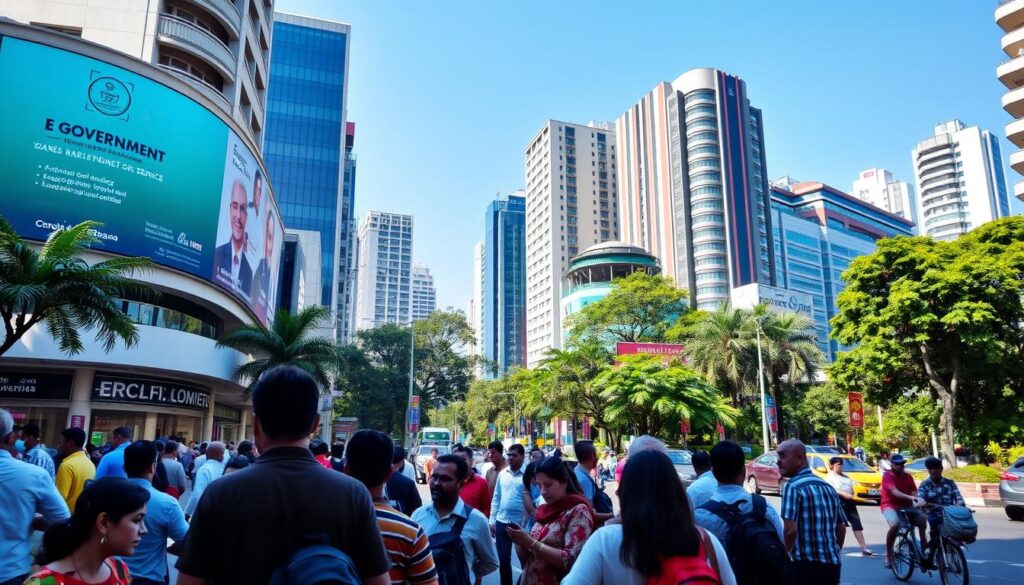
The South Asian island nation of Sri Lanka is seeing big changes in how it’s run. Thanks to digital transformation, the government is pushing fast to get online government services out there. This ensures important work can still happen, even in tough times. The pandemic has really made the move to remote access to government services take off. It’s all part of a plan to grow Sri Lanka’s digital economy.

With the help of State Minister Kanaka Herath, Sri Lanka has big digital goals. They want their digital economy to hit about $15 million by 2030. That’s a huge jump from $4 million in 2022. They’ve set up a plan with the National Digital Strategy 2030. It aims to get more people online and build a strong digital infrastructure.

COVID-19 shook things up, but Sri Lanka kept moving forward. More people are using the internet and social media now than before. The government is working hard to make e-services better. And they’re excited about starting a new digital ID system.

At the same time, Sri Lanka is beefing up its digital laws. They’ve approved the Data Protection Act. This creates a new Data Protection Authority. They’re also working on a Cyber-Security Act. These moves are all about keeping data safe and making sure their digital government is strong.

Sri Lanka's E-Government Services Expand Amidst Pandemic

Sri Lanka’s dedication to digital is inspiring. It’s not just about technology; it’s about bringing people together and making life better. They’re using tech to improve things like health and farming. This will keep the economy and people’s health strong after the pandemic.

Sri Lanka’s E-Government Services Expand Amidst Pandemic

Sri Lanka has taken big steps in digital governance, especially because of COVID-19. It is working on making government e-services and improving government digital infrastructure better. This helps meet the urgent needs of its people. It also increases digital use among them.

The Genesis of Digital Governance in Sri Lanka

Sri Lanka started its digital governance to improve life quality. It looked up to Estonia, known for its digital success. Sri Lanka wants to raise its digital literacy rate and get more people online. Right now, only 37% of its residents use the internet.

Even with better technology and lower costs, more digital projects are needed. A big problem is that many people don’t know enough about how to use digital tools well.

Accelerated Digital Transformation Through National Digital Strategy 2030

COVID-19 made Sri Lanka push its digital change faster with its National Digital Strategy 2030 plan. This plan uses technology to help in social and economic growth. By improving government e-services, it builds a strong digital environment. This prepares Sri Lanka for future challenges and ensures everyone can access information and services.

The Role of ICTA During the COVID-19 Outbreak

During COVID-19, the ICTA showed how vital it is. It came up with digital solutions to help manage the crisis. ICTA created apps like MyHealth Sri Lanka. These apps shared important information and helped with things like airport clearances and tracking contacts.

The work by ICTA supports digitalization initiatives and the aim to improve government digital infrastructure. These efforts link to the National Digital Strategy 2030. They show a plan to increase tourism, enhance public health, and promote digital skills. This creates a digital-first mindset in government and public actions.

Year Internet Penetration Rate (%) Digital Literacy Rate (%)
2019 29.3 28.6
2020 34.3 37.0
2021 38.5 42.0

As Sri Lanka moves forward after the pandemic, improving digital skills is key. By focusing on government e-services, the country is a model for blending digital and traditional governance. This approach makes the society more connected and stronger.

Driving Factors Behind the Surge in Digitalization

Sri Lanka is quickly becoming digital, thanks to several reasons. The COVID-19 pandemic made digital options a must. The country now aims to be a big part of the global digital marketplace. With over 60% of people having mobiles, there’s a strong base for digital growth. Sri Lanka’s digital sector is now worth almost US$3.47 billion. This shows the nation’s big push toward digital technology.

Working with other countries is key to Sri Lanka’s digital plans. For example, India helped fund the Unique Digital Identity Project with 450 million Indian rupees. This project and others like MOSIP show Sri Lanka’s effort to give its citizens a digital ID. But there have been challenges, like delays and worries about data safety. These issues highlight the need for strong privacy and security steps.

Sri Lanka is also focusing on digital education. Projects like ECD and AHEAD are enhancing digital skills among students. This effort is supported by the World Bank and the Asian Development Bank (ADB). The country is getting ready for a future with a digital-savvy workforce.

Sri Lanka’s Economic Recovery: A Peaceful Political Transition

Sri Lanka’s Economic Recovery: A Peaceful Political Transition

Sri Lanka has shown great strength, working towards stability and growth after a tough financial period. Anura Kumara Dissanayake and the Janatha Vimukthi Peramuna (JVP) won 42% of the votes in the presidential election. This was a huge jump from 3% in 2019. This shift shows the country’s desire for change, leading to a smooth political shift, a first in its history.

Economic growth in Sri Lanka is feeling the impact of this change. Inflation has dropped to 2%, and the Sri Lankan Rupee is stable. The GDP growth rate for 2024 is predicted to hit 4%, surpassing the IMF’s 2% estimate. This builds confidence among investors.

The JVP’s rise to power was notable for its calm approach, avoiding hateful speech. This helped Sri Lanka hold elections without violence. It’s a sign of the country’s growing peace and democratic strength. What was once a difficult political scene is now filled with hope, setting a strong base for future growth.

Sri Lanka's Economic Recovery: A Peaceful Political Transition

As Sri Lanka advances on the world stage, it draws international attention. Good market performance and increasing foreign investment reflect its progress. Despite some restrictions from the IMF, economic reforms are making a difference. This moves Sri Lanka towards lasting stability and wealth.

The Path to Sri Lanka’s Political Stability

In 2022, Sri Lanka faced a massive economic challenge. It saw its GDP plummet by 7.8%, marking one of the worst economic downturns globally. This situation pushed the country onto a path aiming for political stability and a better economy. A significant political shift happened peacefully, suggesting a silver lining amidst tough times.

Year GDP Growth Rate Inflation Rate Government Approval Rating
2022 -7.8% 60% 10%
2023 Projected Positive Growth 21%

There was a huge outcry from the public, leading to a major political change. President Gotabaya Rajapaksa resigned due to people demanding a new direction. This reflects a broader desire for transparent and steady governance focused on healing both the economy and the political landscape.

The government has made moves to stabilize the economy with various reforms. Help from neighboring countries, especially India, has been pivotal. India’s emergency aid was essential in keeping Sri Lanka’s economy from further decline. It included postponing trade payments and crucial credits for importing necessities like fuel and medicine.

Political Stability and Economic Recovery in Sri Lanka

The World Bank’s forecast brings hope to Sri Lanka, predicting 4.4% growth by 2024. The industrial and tourism sectors are expected to drive this recovery. But, the journey is cautious, with ongoing reforms and a debt crisis solution being crucial.

Sri Lanka’s journey towards political stability and economic recovery is closely linked. With this political shift, the world is keenly watching. Everyone hopes for a revival in governance and economic performance, making Sri Lanka stand out in South Asia.

Sri Lanka’s Peace Process and Economic Reforms

Sri Lanka is on a journey towards economic stability and recovery. This journey is closely linked with its peace process. The nation is reshaping through political changes and IMF-backed economic reforms.

The Impact of the IMF Programme and Austerity Measures

The IMF program introduced austerity measures in Sri Lanka. These measures are crucial for stabilizing its economy. They include freezing public sector wages, increasing taxes, and cutting government spending.

Though these steps are vital for recovery, they have also lowered living standards temporarily. To help, the Central Bank of Sri Lanka lowered policy rates. This action aims to boost economic activity.

Reshaping Economic Policies for Sustainable Development

Sri Lanka is changing its economic policies for sustainable growth. The country is finding a balance between fiscal duties and social welfare. These strategies are key for not just recovery but also long-term stability.

Political Reconstruction: The Role of Peacebuilding Efforts

Peacebuilding is shaping Sri Lanka’s political reconstruction. It’s crucial for healing and uniting a divided nation. Efforts include reconciliation and promoting transparency and political inclusion.

Maintaining these political reconstruction efforts is key. It’s essential for Sri Lanka’s peace process and democratic stability.

Aspect Pre-2015 Post-2015
Constitutional Framework 20th Amendment – Hyper-presidentialism 19th Amendment – Diminished executive powers
Political Dominance Rajapaksa family control Shift towards more democratic governance
Reconciliation Initiatives Limited government-led efforts Increased focus on integrated reconciliation processes

The mixture of economic policies, IMF support, and peace efforts is key for Sri Lanka. Staying committed to these reforms will help build a stable and prosperous future.

Conclusion

Sri Lanka is on the rise, thanks to a big economic boost. This success story comes from a tough time. The tourism sector’s growth plays a big part in this. It’s about more than just the numbers; it shows a vital comeback. The country’s economy is growing, driven by tourism, smart debt handling, and new education goals. 1.5 million tourists have visited, showing this isn’t just a temporary win.

The country’s economy is changing dramatically. It faces big hurdles, like a 7.8 percent drop in GDP and high poverty. But there’s hope. A $3 billion boost from the IMF and help from India are making a difference. The peaceful move to President Wickremesinghe’s leadership has made the country more stable. This stability is crucial for the economy to get better.

Things are looking up for Sri Lanka as it keeps moving forward. This progress is supported by global partnerships and stronger regional trade. The education system is also getting an, focusing on thinking skills and digital know-how. These changes are part of a big plan for ongoing progress. Through smart policies and education changes, Sri Lanka is healing from its struggles and aiming for a bright future.