Browsed by
Author:

Sri Lanka’s E-Government Services Expand Amidst Pandemic

Sri Lanka’s E-Government Services Expand Amidst Pandemic

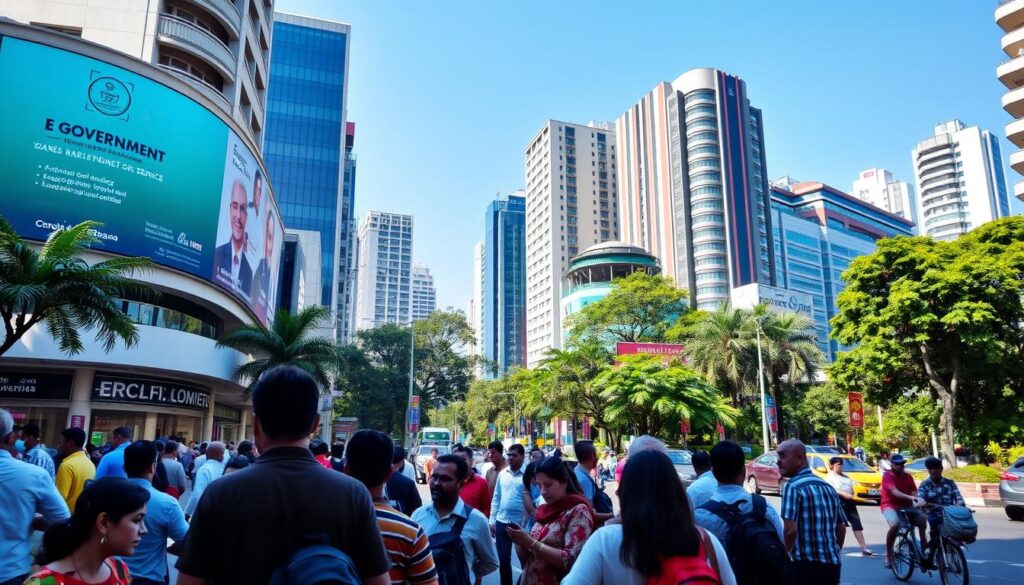
The South Asian island nation of Sri Lanka is seeing big changes in how it’s run. Thanks to digital transformation, the government is pushing fast to get online government services out there. This ensures important work can still happen, even in tough times. The pandemic has really made the move to remote access to government services take off. It’s all part of a plan to grow Sri Lanka’s digital economy.

With the help of State Minister Kanaka Herath, Sri Lanka has big digital goals. They want their digital economy to hit about $15 million by 2030. That’s a huge jump from $4 million in 2022. They’ve set up a plan with the National Digital Strategy 2030. It aims to get more people online and build a strong digital infrastructure.

COVID-19 shook things up, but Sri Lanka kept moving forward. More people are using the internet and social media now than before. The government is working hard to make e-services better. And they’re excited about starting a new digital ID system.

At the same time, Sri Lanka is beefing up its digital laws. They’ve approved the Data Protection Act. This creates a new Data Protection Authority. They’re also working on a Cyber-Security Act. These moves are all about keeping data safe and making sure their digital government is strong.

Sri Lanka's E-Government Services Expand Amidst Pandemic

Sri Lanka’s dedication to digital is inspiring. It’s not just about technology; it’s about bringing people together and making life better. They’re using tech to improve things like health and farming. This will keep the economy and people’s health strong after the pandemic.

Sri Lanka’s E-Government Services Expand Amidst Pandemic

Sri Lanka has taken big steps in digital governance, especially because of COVID-19. It is working on making government e-services and improving government digital infrastructure better. This helps meet the urgent needs of its people. It also increases digital use among them.

The Genesis of Digital Governance in Sri Lanka

Sri Lanka started its digital governance to improve life quality. It looked up to Estonia, known for its digital success. Sri Lanka wants to raise its digital literacy rate and get more people online. Right now, only 37% of its residents use the internet.

Even with better technology and lower costs, more digital projects are needed. A big problem is that many people don’t know enough about how to use digital tools well.

Accelerated Digital Transformation Through National Digital Strategy 2030

COVID-19 made Sri Lanka push its digital change faster with its National Digital Strategy 2030 plan. This plan uses technology to help in social and economic growth. By improving government e-services, it builds a strong digital environment. This prepares Sri Lanka for future challenges and ensures everyone can access information and services.

The Role of ICTA During the COVID-19 Outbreak

During COVID-19, the ICTA showed how vital it is. It came up with digital solutions to help manage the crisis. ICTA created apps like MyHealth Sri Lanka. These apps shared important information and helped with things like airport clearances and tracking contacts.

The work by ICTA supports digitalization initiatives and the aim to improve government digital infrastructure. These efforts link to the National Digital Strategy 2030. They show a plan to increase tourism, enhance public health, and promote digital skills. This creates a digital-first mindset in government and public actions.

Year Internet Penetration Rate (%) Digital Literacy Rate (%)
2019 29.3 28.6
2020 34.3 37.0
2021 38.5 42.0

As Sri Lanka moves forward after the pandemic, improving digital skills is key. By focusing on government e-services, the country is a model for blending digital and traditional governance. This approach makes the society more connected and stronger.

Driving Factors Behind the Surge in Digitalization

Sri Lanka is quickly becoming digital, thanks to several reasons. The COVID-19 pandemic made digital options a must. The country now aims to be a big part of the global digital marketplace. With over 60% of people having mobiles, there’s a strong base for digital growth. Sri Lanka’s digital sector is now worth almost US$3.47 billion. This shows the nation’s big push toward digital technology.

Working with other countries is key to Sri Lanka’s digital plans. For example, India helped fund the Unique Digital Identity Project with 450 million Indian rupees. This project and others like MOSIP show Sri Lanka’s effort to give its citizens a digital ID. But there have been challenges, like delays and worries about data safety. These issues highlight the need for strong privacy and security steps.

Sri Lanka is also focusing on digital education. Projects like ECD and AHEAD are enhancing digital skills among students. This effort is supported by the World Bank and the Asian Development Bank (ADB). The country is getting ready for a future with a digital-savvy workforce.

Sri Lanka’s Economic Recovery: A Peaceful Political Transition

Sri Lanka’s Economic Recovery: A Peaceful Political Transition

Sri Lanka has shown great strength, working towards stability and growth after a tough financial period. Anura Kumara Dissanayake and the Janatha Vimukthi Peramuna (JVP) won 42% of the votes in the presidential election. This was a huge jump from 3% in 2019. This shift shows the country’s desire for change, leading to a smooth political shift, a first in its history.

Economic growth in Sri Lanka is feeling the impact of this change. Inflation has dropped to 2%, and the Sri Lankan Rupee is stable. The GDP growth rate for 2024 is predicted to hit 4%, surpassing the IMF’s 2% estimate. This builds confidence among investors.

The JVP’s rise to power was notable for its calm approach, avoiding hateful speech. This helped Sri Lanka hold elections without violence. It’s a sign of the country’s growing peace and democratic strength. What was once a difficult political scene is now filled with hope, setting a strong base for future growth.

Sri Lanka's Economic Recovery: A Peaceful Political Transition

As Sri Lanka advances on the world stage, it draws international attention. Good market performance and increasing foreign investment reflect its progress. Despite some restrictions from the IMF, economic reforms are making a difference. This moves Sri Lanka towards lasting stability and wealth.

The Path to Sri Lanka’s Political Stability

In 2022, Sri Lanka faced a massive economic challenge. It saw its GDP plummet by 7.8%, marking one of the worst economic downturns globally. This situation pushed the country onto a path aiming for political stability and a better economy. A significant political shift happened peacefully, suggesting a silver lining amidst tough times.

Year GDP Growth Rate Inflation Rate Government Approval Rating
2022 -7.8% 60% 10%
2023 Projected Positive Growth 21%

There was a huge outcry from the public, leading to a major political change. President Gotabaya Rajapaksa resigned due to people demanding a new direction. This reflects a broader desire for transparent and steady governance focused on healing both the economy and the political landscape.

The government has made moves to stabilize the economy with various reforms. Help from neighboring countries, especially India, has been pivotal. India’s emergency aid was essential in keeping Sri Lanka’s economy from further decline. It included postponing trade payments and crucial credits for importing necessities like fuel and medicine.

Political Stability and Economic Recovery in Sri Lanka

The World Bank’s forecast brings hope to Sri Lanka, predicting 4.4% growth by 2024. The industrial and tourism sectors are expected to drive this recovery. But, the journey is cautious, with ongoing reforms and a debt crisis solution being crucial.

Sri Lanka’s journey towards political stability and economic recovery is closely linked. With this political shift, the world is keenly watching. Everyone hopes for a revival in governance and economic performance, making Sri Lanka stand out in South Asia.

Sri Lanka’s Peace Process and Economic Reforms

Sri Lanka is on a journey towards economic stability and recovery. This journey is closely linked with its peace process. The nation is reshaping through political changes and IMF-backed economic reforms.

The Impact of the IMF Programme and Austerity Measures

The IMF program introduced austerity measures in Sri Lanka. These measures are crucial for stabilizing its economy. They include freezing public sector wages, increasing taxes, and cutting government spending.

Though these steps are vital for recovery, they have also lowered living standards temporarily. To help, the Central Bank of Sri Lanka lowered policy rates. This action aims to boost economic activity.

Reshaping Economic Policies for Sustainable Development

Sri Lanka is changing its economic policies for sustainable growth. The country is finding a balance between fiscal duties and social welfare. These strategies are key for not just recovery but also long-term stability.

Political Reconstruction: The Role of Peacebuilding Efforts

Peacebuilding is shaping Sri Lanka’s political reconstruction. It’s crucial for healing and uniting a divided nation. Efforts include reconciliation and promoting transparency and political inclusion.

Maintaining these political reconstruction efforts is key. It’s essential for Sri Lanka’s peace process and democratic stability.

Aspect Pre-2015 Post-2015
Constitutional Framework 20th Amendment – Hyper-presidentialism 19th Amendment – Diminished executive powers
Political Dominance Rajapaksa family control Shift towards more democratic governance
Reconciliation Initiatives Limited government-led efforts Increased focus on integrated reconciliation processes

The mixture of economic policies, IMF support, and peace efforts is key for Sri Lanka. Staying committed to these reforms will help build a stable and prosperous future.

Conclusion

Sri Lanka is on the rise, thanks to a big economic boost. This success story comes from a tough time. The tourism sector’s growth plays a big part in this. It’s about more than just the numbers; it shows a vital comeback. The country’s economy is growing, driven by tourism, smart debt handling, and new education goals. 1.5 million tourists have visited, showing this isn’t just a temporary win.

The country’s economy is changing dramatically. It faces big hurdles, like a 7.8 percent drop in GDP and high poverty. But there’s hope. A $3 billion boost from the IMF and help from India are making a difference. The peaceful move to President Wickremesinghe’s leadership has made the country more stable. This stability is crucial for the economy to get better.

Things are looking up for Sri Lanka as it keeps moving forward. This progress is supported by global partnerships and stronger regional trade. The education system is also getting an, focusing on thinking skills and digital know-how. These changes are part of a big plan for ongoing progress. Through smart policies and education changes, Sri Lanka is healing from its struggles and aiming for a bright future.

Sri Lankan Education Reforms Promise Major Progress

Sri Lankan Education Reforms Promise Major Progress

Sri Lanka is set for major educational changes. Presidential candidates pledge to improve learning outcomes. President Wickremesinghe plans vocational training and university expansion, while Premadasa focuses on teacher support and smart schools.

Anura Kumara Dissanayake, NPP leader, prioritizes early childhood development. He aims to ensure equal access to education for all. The NPP gained three seats in the 2020 election, with Dissanayake receiving 42.31% of votes.

These reforms introduce innovative teaching methods and integrate technology. They focus on improving English skills and simplifying exams. Comprehensive teacher training is also a key aspect of these changes.

Statistics show high graduate unemployment rates across provinces. University admission disparities are also evident. The per capita cost of education has risen sharply since 2000.

These figures highlight the need for sustainable financing in higher education. Educational reforms are crucial for Sri Lanka’s progress. They promise to address these challenges and improve the overall system.

Presidential Candidates Pledge Comprehensive Education Reforms

Sri Lanka’s presidential candidates have unveiled plans for education reforms. Their focus includes vocational training, university expansion, and free teacher transportation. They also aim for smart schools, early childhood development, and equal education access.

President Ranil Wickremesinghe’s Plans for Vocational Training and University Expansion

President Wickremesinghe plans to establish Vocational Skills Sri Lanka by 2025. This will streamline training and help students gain workforce skills.

He also aims to open Technical and Vocational Management University Colleges in all provinces. This will expand higher education access across the country.

Sajith Premadasa’s Focus on Free Transportation for Teachers and Smart Schools

Sajith Premadasa pledges free public transportation for all teachers. He recognizes their crucial role in shaping the nation’s future.

Premadasa plans to transform every school into a smart school. These schools will have electricity, water facilities, and physical resources.

Anura Kumara Dissanayake’s Commitment to Early Childhood Development and Equal Access

Anura Kumara Dissanayake proposes early childhood centers near workplaces or homes. These centers will support children’s physical and psychological growth.

Dissanayake advocates for equal education access. He wants all children to receive quality education, regardless of their background.

These reforms aim to address Sri Lanka’s education system challenges. They could improve the lives of students and teachers across the country.

Transforming Schools into Smart Learning Environments

Sri Lankan presidential candidates propose innovative initiatives to transform schools into smart learning environments. The global market for smart education is expected to reach USD 586.04 billion by 2021. These reforms aim to use technology to enhance learning for students nationwide.

Expanding the ‘Sakwala’ Program for Digital Learning Platforms

Sajith Premadasa’s manifesto prioritizes expanding the ‘Sakwala’ program for digital learning in schools. This initiative will extend to technical, vocational institutions, and universities. It will make quality education more affordable and accessible.

Students will engage in interactive and personalized learning experiences. This approach will prepare them for the challenges of the 21st century.

Establishing a School Twinning Program for Global Partnerships

Premadasa proposes a school twinning program to foster global partnerships. This initiative will encourage collaborative learning between schools worldwide. Students will interact with peers from different cultures, broadening their horizons.

Mandating School Trust Funds for Facility Maintenance and Sustainability

Premadasa plans to mandate school trust funds supported by local communities. These funds will ensure regular maintenance of school infrastructure. Investing in school facilities aims to create better learning spaces for students.

Sri Lanka’s journey towards smart learning environments requires careful planning. It’s crucial to consider best practices from organizations like the International Standards Organization (ISO). Leveraging expertise from tech companies and researchers will ensure effective implementation of these reforms.

Curriculum Restructuring and Teacher Training Initiatives

The government proposes curriculum restructuring and assessment reforms to address learning burdens and education gaps. These initiatives aim to streamline students’ educational experience and align content with 21st-century needs. The focus is on making education more relevant and manageable for students.

A key proposal is implementing STEEAM education, emphasizing Science, Technology, English, Engineering, Arts, and Mathematics. The government plans to expedite teacher training activities. This will equip educators with skills to deliver the new curriculum effectively.

Simplifying the Grade 5 Scholarship Examination

The Grade 5 Scholarship Examination causes significant stress for children. The government plans to simplify and restructure this assessment. This change aims to reduce pressure on young students while still rewarding academic excellence.

Enhancing Early Childhood Education

Early childhood education accreditation is a priority for the government. Plans include establishing a regulatory authority and upgrading infrastructure. The focus is on creating child-friendly, modern learning environments.

Teacher training programs will be enhanced to support these changes. The government also aims to engage parents in the education process. This will create a supportive environment for young learners.

Focusing on English Language Skills

The government plans to enhance English language skills from an early stage. This will prepare students for success in a globalized world. English learning will be integrated throughout the primary and secondary curriculum.

Significant Advancements in Education Expected Through Current Reforms

Sri Lanka’s education sector is set for major improvements. President Ranil Wickremesinghe plans to establish a National Higher Education Authority. This body will research global education reforms and allocate funds to education sectors.

These initiatives aim to boost education quality and meet international standards. The reforms focus on modern learning methods and better infrastructure. The ‘Sakwala’ program will expand digital learning platforms.

A school twinning program will create global partnerships. Mandated School Trust Funds will maintain school facilities. This will create better learning environments for students.

Curriculum restructuring and teacher training are key reform areas. STEEAM education will focus on Science, Technology, English, Engineering, Arts, and Mathematics. This approach will equip students with essential modern skills.

The Grade 5 Scholarship Exam will be simplified. Early childhood educators will receive comprehensive training and accreditation. These changes will improve education quality at all levels.

The government is increasing university enrollment and expanding National Colleges of Education. They’re recruiting language teachers skilled in various foreign languages. Lecturers and professors from abroad are being brought back.

Sri Lanka is embracing e-learning, blockchain technology, and AI in education. These advancements will prepare students for the changing global landscape. The improved educational outcomes will benefit the nation’s future workforce.

FAQ

What are the key focus areas of the proposed education reforms in Sri Lanka?

Sri Lanka’s education reforms focus on several key areas. These include vocational training, university expansion, and free teacher transportation. The reforms also aim to create smart learning environments and ensure equal access to education.

How does President Ranil Wickremesinghe plan to improve vocational training in Sri Lanka?

President Wickremesinghe plans to establish Vocational Skills Sri Lanka (VSSL) by 2025. This new entity will combine existing training authorities. He also aims to open Technical and Vocational Management University Colleges in all provinces.

What are Sajith Premadasa’s key proposals for enhancing the education system?

Premadasa promises free public transport for all teachers. He plans to transform schools into smart learning spaces with modern facilities. His proposals include expanding digital learning platforms and creating global school partnerships.

How does Anura Kumara Dissanayake plan to support early childhood development?

Dissanayake focuses on early childhood development centers near workplaces or homes. He aims to create environments that support children’s physical and psychological growth.

What is the proposed STEEAM education system, and how will it be implemented?

STEEAM stands for Science, Technology, English, Engineering, Arts, and Mathematics. Premadasa’s plan prioritizes these subjects in all schools. The system will be implemented by fast-tracking teacher training activities.

How will the proposed education reforms address the mental stress caused by the Grade 5 Scholarship Examination?

Premadasa suggests simplifying the Grade 5 Scholarship Examination. This change aims to reduce the immense mental stress on children. The goal is to make the exam less pressurizing for students.

What improvements are planned for Early Childhood Education (ECE) in Sri Lanka?

The reforms include creating an ECE regulatory authority. They also focus on upgrading child-friendly infrastructure and enhancing teacher training. Promoting parental engagement is another key aspect of the planned improvements.

How will the education reforms help Sri Lankan students compete globally?

The reforms introduce modern learning methods and improved infrastructure. They focus on key subjects like science, technology, and English. These changes aim to equip students with skills needed for global success.
Sri Lanka Agricultural Exports Surge in First Half of 2024

Sri Lanka Agricultural Exports Surge in First Half of 2024

Sri Lanka’s agricultural exports have soared in early 2024, outpacing the previous two years. B.L.A.J. Dharmakeerthi, Secretary of Agriculture, credits this to measures addressing the 2023 export decline. This growth occurred despite recent challenging weather conditions.

Key commodities show significant export increases. Tea exports jumped from USD 407.6 million to USD 450.5 million between April 2023 and 2024. Coconut exports rose from USD 212 million to USD 263 million in the same period.

Rubber exports also grew, reaching USD 335 million by April 2024, up from USD 299 million. This surge stems from better crop yields, increased global demand, and advanced farming technologies.

Government support for the rural economy and agricultural production policies have boosted this positive trend. The growth in exports is set to improve Sri Lanka’s trade surplus and economic recovery.

Rising demand for Sri Lankan goods positions the country to strengthen its global trading presence. This opportunity could further enhance Sri Lanka’s role in international commodities markets.

Decisive Actions Fuel Agricultural Export Growth

Sri Lanka’s agricultural sector has shown impressive growth despite recent climate challenges. The government’s proactive measures in 2023 have driven this success. Secretary Dharmakeerthi highlighted the sector’s achievements at a recent press briefing.

Strategic agricultural policies have been key to driving sector growth. These include subsidized fertilizer supply and support for tea cultivation projects. These initiatives have ensured essential inputs and provided financial support to farmers.

Overcoming Challenges and Adverse Weather Conditions

Sri Lanka’s agricultural sector has shown remarkable adaptability despite adverse weather. The government’s timely interventions have helped mitigate these challenges. Subsidies for fertilizers and support for replanting efforts have been crucial.

Proactive Measures Implemented in 2023 Lead to Substantial Growth

The government’s 2023 measures have set a strong foundation for 2024 growth. A special program ensuring adequate fertilizer supply has been implemented. Ongoing support for tea replanting and new cultivation projects continues.

Tea exports to Iran alone reached USD 250.9 million for fuel debt. Coconut exports increased from USD 212 million to USD 263 million, a 24% rise. Rubber exports grew from USD 299 million to USD 335 million by April 2024.

Cinnamon and pepper exports also showed positive trends. These results reflect the sector’s overall growth. They also demonstrate the effectiveness of the government’s supportive policies.

Agricultural Exports Surge in First Half of 2024, Reports Ministry

Sri Lanka’s agricultural exports have soared in the first half of 2024. Favorable commodity prices and increased production volumes have boosted the country’s export performance. The global economic recovery and growing international demand have driven this surge.

Tea Exports Rise from USD 407.6 Million to USD 450.5 Million

Tea exports jumped from USD 407.6 million to USD 450.5 million between April 2023 and 2024. High-quality Ceylon tea is in increasing demand worldwide. Sri Lanka is also expanding its presence in new markets.

Coconut Exports Climb from USD 212 Million to USD 263 Million

Sri Lanka’s coconut exports showed remarkable resilience despite weather challenges in 2023. Coconut-related exports rose from USD 212 million to USD 263 million. This represents a 24% increase in earnings compared to the previous year.

Rubber Exports Increase from USD 299 Million to USD 335 Million

Rubber exports in Sri Lanka grew from USD 299 million to USD 335 million. New planting and replanting projects have expanded rubber cultivation. The government has provided substantial financial support for these initiatives.

Cinnamon and Pepper Exports Show Robust Growth

Cinnamon and pepper exports have also experienced strong growth. Global demand for these spices has increased. Sri Lanka’s reputation for high-quality varieties has contributed to this growth.

Sri Lanka Inflation Hits 70% in Economic Crisis

Sri Lanka Inflation Hits 70% in Economic Crisis

In September 2022, Sri Lanka’s Inflation surged to a shocking 70%. This reflects the severe Inflation Crisis Sri Lanka is facing. The country has been through tough economic times since it gained independence.

Sri Lanka is now seeking the International Monetary Fund (IMF)’s aid. Talks about a bailout are underway. This isn’t new. Since 1965, Sri Lanka has sought IMF’s help sixteen times. A strict set of reforms may follow this rescue, typical of IMF agreements. Find out more about Sri Lanka’s economic situation and IMF involvement here.

The country also relies on other financial support, including loans from the Asian Development Bank and World Bank. These add up to US$12.13 billion. Despite this, Sri Lanka has looked towards Foreign Direct Investment (FDI) and remittances from overseas. However, COVID-19 has greatly reduced these remittances, worsening the financial strain.

The Sri Lanka Economic Turmoil requires immediate, smart steps towards recovery. Thankfully, there’s a silver lining. Recent trends show a decrease in inflation. This hints at a possible stabilization. Learn more about the government’s actions against the inflation crisis.

Sri Lanka's Inflation Peaks at 70% Amidst Economic Turmoil

Understanding Sri Lanka’s Inflation Crisis

Sri Lanka is facing tough economic times, and the rise in inflation is a big concern. This hike is vividly shown by the jump in the National Consumer Price Index (NCPI). This index measures how much prices have gone up.

Breaking Down the National Consumer Price Index Surge

Last May, prices went up by 45.3% compared to the year before, as shown by the NCPI. This major increase comes from higher prices for many consumer goods. It makes the cost of living in Sri Lanka more expensive, leading to tough economic challenges.

Food Inflation and Energy Costs’ Impact on Inflation Rates

Food inflation alone rose to 58% from the previous year. This happened as energy prices shot up. Higher energy costs also mean more expensive transportation and production. All these elements together push the inflation rate higher in Sri Lanka.

Rising Prices Sri Lanka

To fix the economy, Sri Lanka is trying various reforms. The Central Bank has tweaked its policies to meet these challenges. The country is also looking for help through global partnerships. This includes a key deal with the International Monetary Fund (IMF). The aim is to control inflation and get financial help during these hard times.

New measures are being set up to deal with inflation’s impacts. One priority is to change cash transfer programs. These changes are meant to help those hit hardest by the rising costs.

Year Annual Inflation Rate Main Contributing Factors
2022 70% Post-pandemic economic disruption, high energy costs
Mid-2023 12% Regulatory measures, international aid

As Sri Lanka works towards economic recovery, monitoring inflation is crucial. The government and analysts are focused on reducing the negative impacts. Their goal is to create a stable economic future for the country.

Sri Lanka’s Economic Turmoil and the Role of International Aid

Sri Lanka faces tough times with a huge 70% inflation rate. This situation causes much economic uncertainty. Fortunately, the country is seeking help from international partners. This assistance is crucial for them now, just like it was for other countries in the past.

Learning from nations like Germany and Zimbabwe, unchecked inflation can hurt economies badly. It lowers living standards and shakes confidence in the market. So, international help is very important for Sri Lanka. It will help stop economic decline and bring back stability.

The IMF’s extended fund facility gave crucial support during this economic crisis. This deal, worth $2.9 billion, marks Sri Lanka’s 17th time getting help from the IMF. It aims to fix the country’s debt issues and improve economic health.

Reforming monetary policy is a key part of the plan. It will handle inflation and help keep the economy stable. This approach is vital for Sri Lanka’s future growth and economic stability.

International aid for Sri Lanka isn’t just from the IMF. The World Bank and the Asian Development Bank also plan to help. They intend to provide around $4 billion more. This global support is a ray of hope for the country.

These funds aim to stop the inflation and support recovery. They back up programs improving education and helping children. These efforts are already making a difference during these hard times. With high inflation, such reforms are necessary.

Projects like the Climate Resilience initiative are also key. They focus on improving agriculture and building stronger infrastructures. These steps are essential for Sri Lanka’s economic recovery and growth.